 English
 Spanish
 French
 German
 Italian
 Chinese (Simplified)
 Japanese
 Korean
 Arabic
 Portuguese
 Call Us : 08045800544
 Call Us : 08045800544
 Get a Quote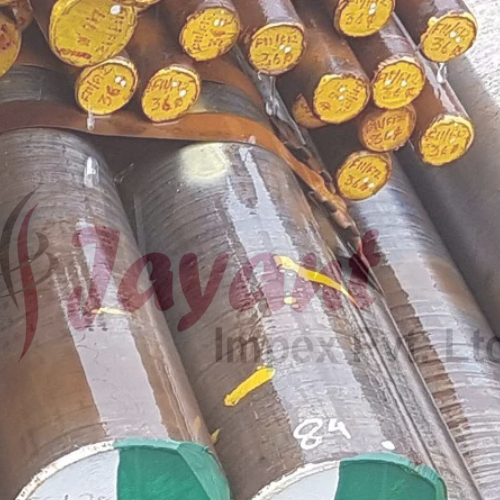
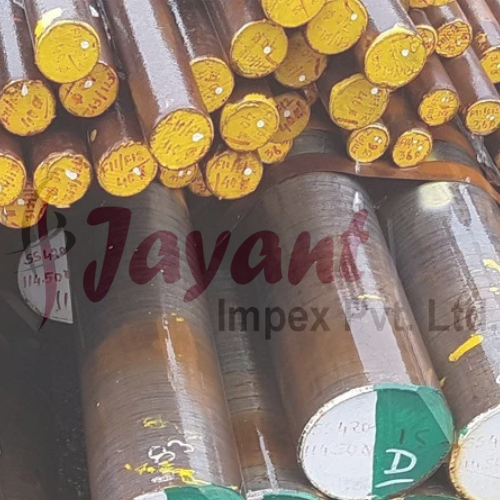
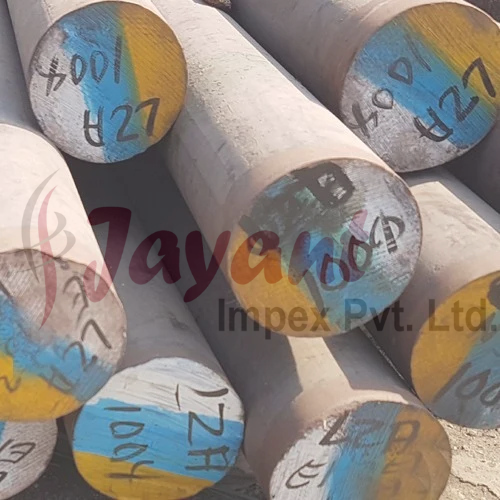
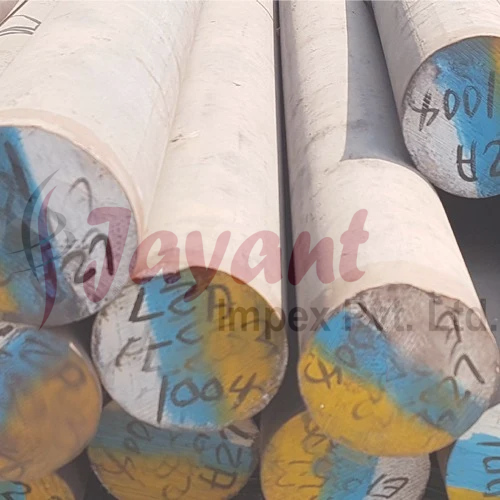
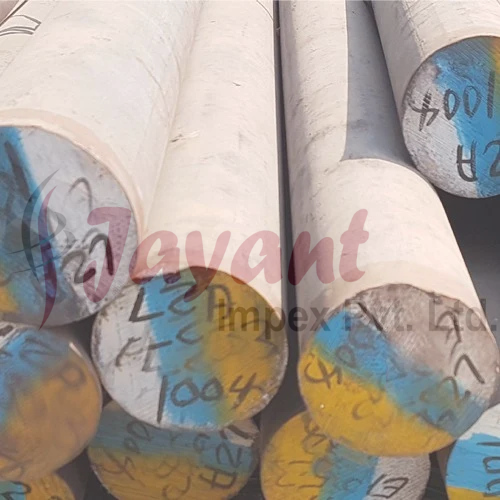
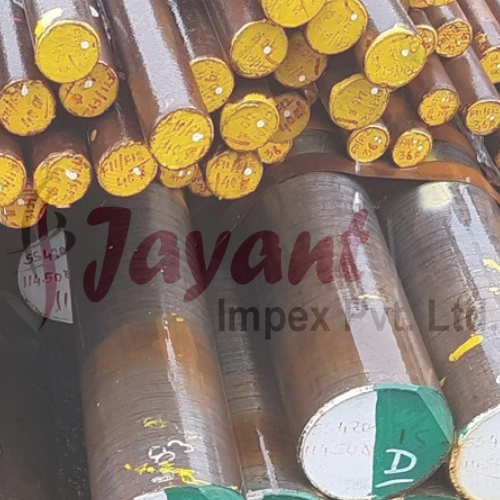
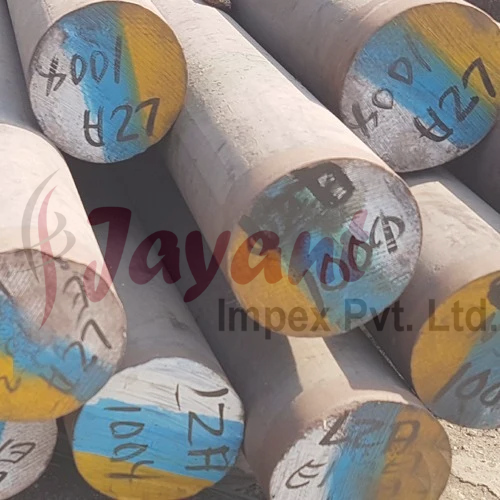
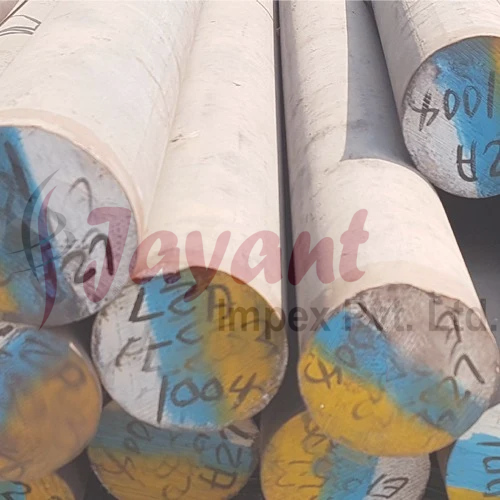
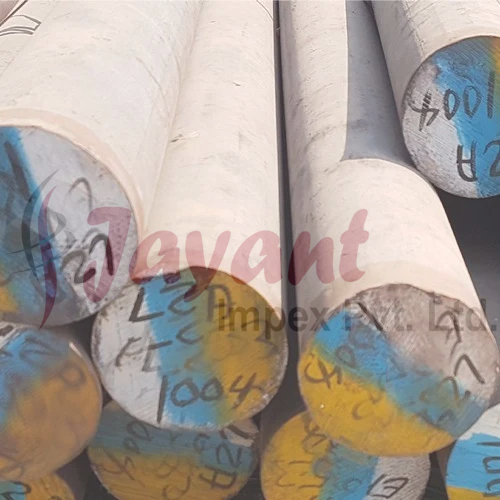
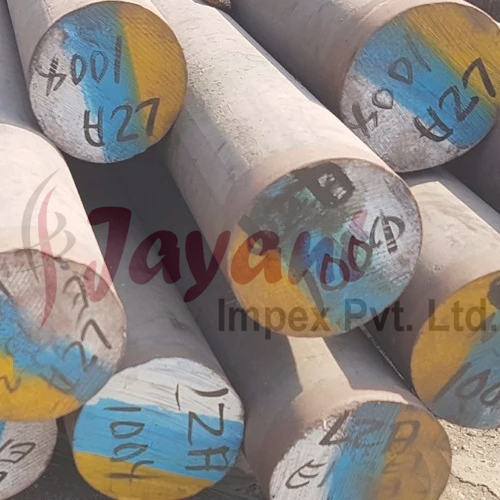
W.Nr. 20NiCrMo2 Alloy Steel Chrome Moly Bars
80.0 INR/Kilograms
Product Details:
- Standard DIN 17210, EN 10084, AISI 8620 equivalent
- Type Alloy Steel Chrome Moly Bars
- Diameter 20 mm to 350 mm or custom
- Processing Forged, Rolled, Heat Treated
- Material W.Nr. 20NiCrMo2 Alloy Steel
- Length As per customer requirement (customized lengths available)
- Grade 20NiCrMo2
- Click to view more
X
W.Nr. 20NiCrMo2 Alloy Steel Chrome Moly Bars Price And Quantity
- 80.0 INR/Kilograms
- 1 Kilograms
W.Nr. 20NiCrMo2 Alloy Steel Chrome Moly Bars Product Specifications
- Forged, Rolled, Heat Treated
- W.Nr. 20NiCrMo2 Alloy Steel
- 20 mm to 350 mm or custom
- As per customer requirement (customized lengths available)
- 20NiCrMo2
- DIN 17210, EN 10084, AISI 8620 equivalent
- Alloy Steel Chrome Moly Bars
- Polished, Peeled, Turned, Black
- h9, h10, or as required
- Engineering, automotive components, gears, shafts, and machinery parts
- Hot Rolled
- Case-hardening, nitriding, and carburizing applications
- Round Bar
- Bundles with proper marking
- Nickel, Chromium, Molybdenum
- Carburized, Quenched, and Tempered
- Annealed or as rolled
- 160-207 HB (as supplied, untreated)
- Bright, Black, or Machined
Product Description
W.Nr. 1.6523 (standardized as 20NiCrMo2-2 or simply 20NiCrMo2 under EN 10084) is a highly prominent Nickel-Chromium-Molybdenum low-alloy steel. While it contains chromium and molybdenum, it belongs firmly to the triple-alloy case-hardening (cementation) steel family.
If you are sourcing or machining W.Nr. 20NiCrMo2 bars, you are using the precise European equivalent to the globally standard North American AISI 8620 grade. It is specifically formulated for components that require an incredibly hard outer protective shell to resist severe friction, while retaining a highly ductile, shatter-proof inner core to absorb impact.
1. Chemical Formula (EN 10084)
The intentional reduction of base carbon combined with small, synergistic additions of Nickel, Chromium, and Molybdenum defines its unique microstructure:
| Element | Composition (%) | Primary Metallurgical Role |
| Carbon (C) | $0.17% - 0.23%$ | Kept deliberately low to ensure the core remains weldable and highly ductile after quenching. |
| Nickel (Ni) | $0.40% - 0.70%$ | Increases internal core toughness, impact strength, and fatigue resistance. |
| Chromium (Cr) | $0.35% - 0.70%$ | Enhances hardenability depth and permits excellent surface hardness during carburizing. |
| Molybdenum (Mo) | $0.15% - 0.25%$ | Refines grain structure and protects against temper brittleness. |
| Manganese (Mn) | $0.65% - 0.95%$ | Stabilizes heat treatment response and acts as a deoxidizer. |
2. The Case-Hardening Strategy
Because the base carbon of a 20NiCrMo2 bar sits at only $sim0.20%$, standard direct quenching will not yield high surface hardness. Instead, machined components are put through a carburizing cycle:
-
Carburizing ($880^circtext{C} - 980^circtext{C}$): The part is heated in a carbon-rich atmosphere, forcing carbon to diffuse into the surface layer up to a depth of 0.5 to 2.0 mm, raising the outer carbon concentration to $sim0.80%$.
-
Quenching ($780^circtext{C} - 820^circtext{C}$): The bar is rapidly cooled in oil or water.
-
Tempering ($150^circtext{C} - 200^circtext{C}$): A low-temperature bake relieves internal stresses.
-
The Final Dual-State Result: You achieve a glass-hard surface case of 58 to 63 HRC for supreme wear resistance, wrapped around a strong, resilient inner core with a core tensile strength of 700 to 1100 MPa (depending on bar cross-section diameter).
3. Core Delivery & Structural Conditions
When purchasing W.Nr. 20NiCrMo2 bars from a service center, they are usually supplied in specific structural conditions:
-
Soft Annealed (+A): Normalized/annealed to a maximum hardness of 212 HBW. This is the standard choice for precision CNC machining, turning, and gear-cutting to extend tool insert life.
-
Treated to Ferrite-Pearlite Structure (+FP): Controlled cooled to a predictable hardness window (149 to 194 HBW) optimized specifically for consistent high-speed machining and dimensional stability.
-
Treated for Cold Shearability (+S): Softened to a max of 255 HBW to allow heavy industrial cold shears to chop or cold-head the bar stock without cracking the outer edges.
4. Key Engineering Applications
20NiCrMo2 bars are frequently machined into components exposed to severe contact friction and violent torque shifts:
-
Automotive & Powertrain: Driving bevel gears, planetary gear sets, crown wheels, splined transmission shafts, and camshafts.
-
Mechanical Components: Heavy-duty bushings, sleeves, high-load guide pins, link pins, and universal joint journals.
-
Industrial Fasteners: Specialized structural fasteners and high-fatigue bolts subject to intense shearing loads.
5. Direct Global Cross-References
If you are interpreting global technical prints or trying to verify mill test certificates (MTCs):
-
USA: AISI 8620 / SAE 8620 / UNS G86200
-
Japan: JIS SNCM220 / SNCM220H
-
France (AFNOR): 20NCD2 / 22NCD2
-
United Kingdom: BS 805M20 / 806M20
-
China: GB 20CrNiMo
-
Russia: GOST 20KhNM (20)
6. Machining & Welding Guidelines
Fabrication Notes
Excellent Machinability: In the supplied +A or +FP conditions, this material machines cleanly and leaves an exceptionally smooth surface finish, which is ideal for the tight tolerances required by gearboxes.
Favorable Weldability: Thanks to its low base carbon content, 20NiCrMo2 features significantly better weldability than high-carbon chrome-moly grades like 42CrMo4 (AISI 4140). However, because of the nickel and chromium content, preheating the bar to $150^circtext{C} - 200^circtext{C}$ is still highly recommended for thicker cross-sections to eliminate any risk of hydrogen micro-cracking in the heat-affected zone (HAZ).
Superior Alloy Composition for Enhanced Performance
20NiCrMo2 Alloy Steel Bars are designed with a unique blend of Nickel, Chromium, and Molybdenum, providing excellent toughness, strength, and wear resistance. These properties make the bars particularly suitable for case-hardening, nitriding, and carburizing processes, which are essential for producing durable components for automotive and industrial machinery.
Versatile Surface and Delivery Conditions
Customers can choose from a variety of surface conditions, including bright, black, polished, peeled, and turned finishes, as well as delivery states like annealed or as rolled. This flexibility allows for optimized performance and easier processing during manufacturing, with each bar marked for traceability and supplied in secure bundles.
Customizable Dimensions to Suit Every Requirement
With diameters ranging from 20 mm to 350 mm and customizable lengths, 20NiCrMo2 Alloy Steel Bars can be tailored to the specific needs of various industries. Whether for gears, shafts, or structural machinery, these bars provide the dimensional accuracy and reliability required for precision engineering applications.
FAQ's of W.Nr. 20NiCrMo2 Alloy Steel Chrome Moly Bars:
Q: How are 20NiCrMo2 Alloy Steel Chrome Moly Bars typically processed before use?
A: These bars are delivered in an annealed or as-rolled state with a hardness of 160-207 HB. They are often further processed with carburizing, nitriding, or quenching and tempering based on the application's requirements, which significantly enhances their surface hardness, fatigue resistance, and overall durability.Q: What are the main applications of W.Nr. 20NiCrMo2 alloy steel bars?
A: W.Nr. 20NiCrMo2 bars are primarily used in engineering and automotive sectors for manufacturing components like gears, shafts, and machinery parts that require superior case-hardening properties and resistance to wear.Q: When should I choose a bright, black, or machined surface condition for my order?
A: The choice depends on the subsequent manufacturing process and the final appearance required. Bright and polished finishes are preferred for visible or decorative parts, while black or machined surfaces are suitable for components undergoing further machining or where surface appearance is less critical.Q: Where are these alloy steel bars manufactured and supplied from?
A: 20NiCrMo2 Alloy Steel Chrome Moly Bars are manufactured, processed, and supplied across India by various dealers, exporters, fabricators, producers, manufacturers, and traders, ensuring wide availability and sourcing flexibility.Q: What standards do these bars comply with, and what tolerances are achievable?
A: These bars meet international standards such as DIN 17210, EN 10084, and AISI 8620 equivalent. Dimensional tolerances up to h9 or h10 are available, with custom tolerances provided as per customer requirements.Q: How can customized lengths and diameters be specified for my project?
A: Customers can specify their desired length and diameter within the available range (20 mm to 350 mm or as required) when placing their orders. Customization helps ensure material efficiency and ease of integration into specific manufacturing processes.Q: What are the benefits of using 20NiCrMo2 Alloy Steel Bars in heavy machinery?
A: The primary benefits include excellent case-hardening response, superior core toughness, and enhanced fatigue resistance, resulting from their specific alloying elements. These attributes make them ideal for parts exposed to high mechanical stresses and demanding operational environments.Tell us about your requirement

Price:
Quantity
Select Unit
- 50
- 100
- 200
- 250
- 500
- 1000+
Additional detail
Mobile number
Email

Other Products in 'Steel Bar' category

JAYANT IMPEX
GST : 27AAQFJ5764L1ZJ
GST : 27AAQFJ5764L1ZJ

- 6th, 605, Majestic Shopping Center, Jagannath Shankarseth Road, Girgaon,Mumbai - 400004, Maharashtra, India
- Phone : 08045800544

- Mr Shrenik Prakash Mehta (Director)
- Mobile : 08045800544
-
jayantimpex12@gmail.com


-
Share to



 Send Inquiry
 Send SMS
 Call Me Free
JAYANT IMPEX PVT. LTD. All Rights Reserved.(Terms of Use)
Developed and Managed by Infocom Network Private Limited. Terms of use | Returns Policy Member
Developed and Managed by Infocom Network Private Limited. Terms of use | Returns Policy Member
