 English
 Spanish
 French
 German
 Italian
 Chinese (Simplified)
 Japanese
 Korean
 Arabic
 Portuguese
 Call Us : 08045800544
 Call Us : 08045800544
 Get a Quote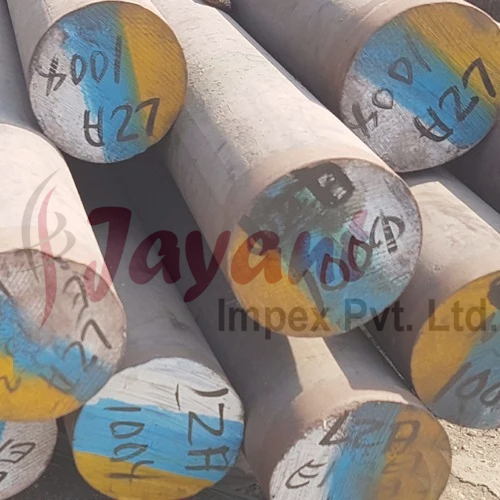
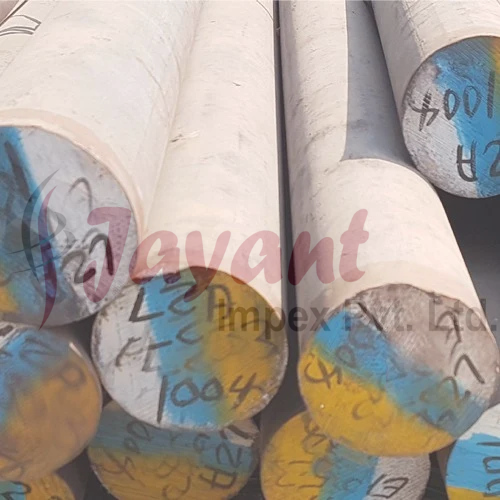
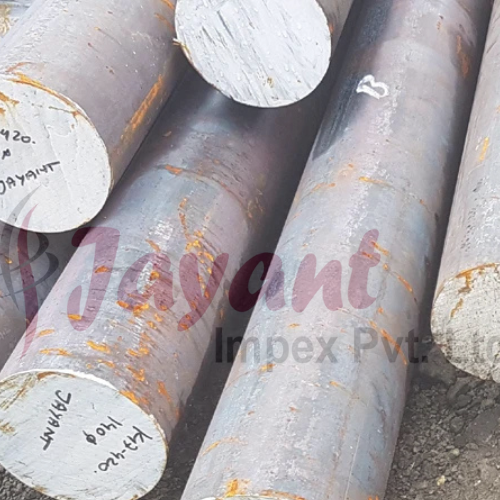
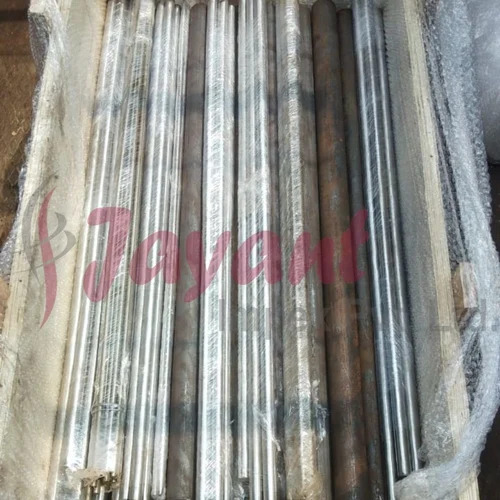
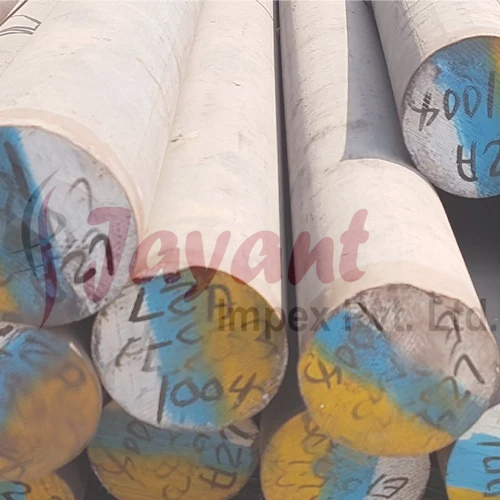
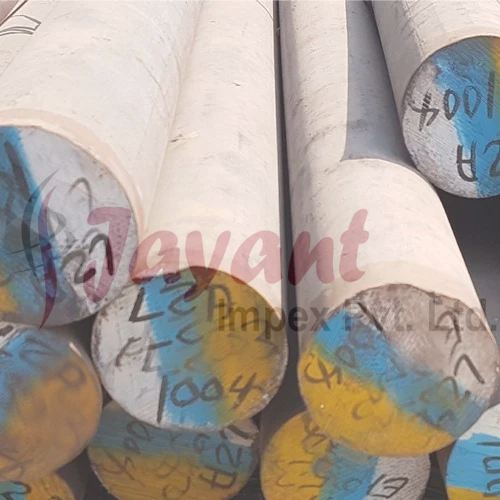
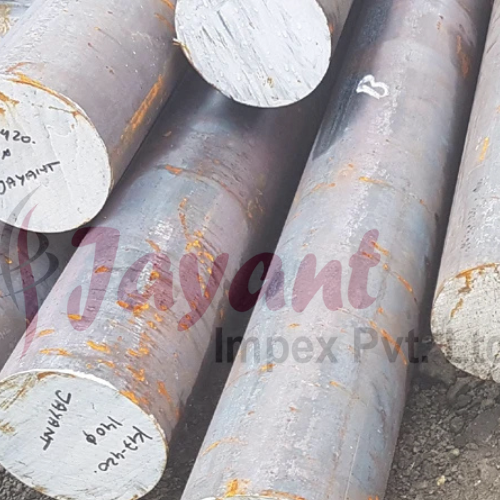
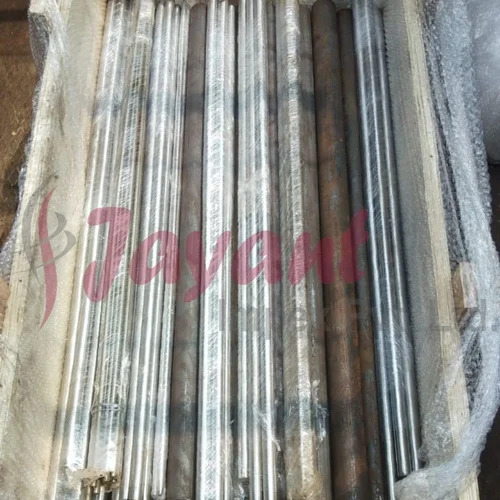
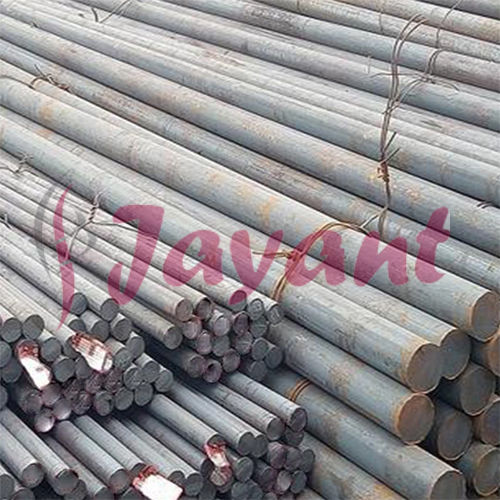
Chrome Moly 40CrMo4 Alloy Steel Bars
95.0 INR/Kilograms
Product Details:
- Length 2 to 6 meters or as required
- Finish Black / Bright
- Grade 40CrMo4
- Type Round Bar
- Diameter 16 mm to 450 mm
- Technique Hot Rolled / Forged
- Specific Use Shafts, Gears, Bolts, Axles, High Stress Components
- Click to view more
X
Chrome Moly 40CrMo4 Alloy Steel Bars Price And Quantity
- 1 Kilograms
- 95.0 INR/Kilograms
Chrome Moly 40CrMo4 Alloy Steel Bars Product Specifications
- Heat Treated, Tempered, Annealed
- Black / Bright
- ASTM, DIN, EN, GB, JIS
- Automotive, Engineering, Construction, Machinery, Tooling Industries
- 2 to 6 meters or as required
- 40CrMo4
- Round Bar
- Hot Rolled / Forged
- 16 mm to 450 mm
- Shafts, Gears, Bolts, Axles, High Stress Components
- h9, h11 or as per specification
- Chrome Moly 40CrMo4 Alloy Steel
- Min 835 MPa (Quenched & Tempered)
- Quenching and Tempering
- Annealed / Quenched & Tempered: 217-255 HB
- Min 35 J @ +20C
- Min 1000 MPa (Quenched & Tempered)
- As Rolled, Normalized, Q&T
- Surface Peeled, Turned, Polished Available
- 14% Min (in 50 mm)
Product Description
40CrMo4 is a high-strength, high-hardenability Chromium-Molybdenum (Chrome Moly) alloy steel specified under the European EN 10083-3 standard. If you are sourcing or machining this grade, you are working with the direct metallurgical sister to DIN 1.7225 and AISI 4140.
The designation itself tells you the precise structural formula: 40 indicates an average carbon content of 0.40%, Cr highlights Chromium for surface wear resistance, and Mo signifies Molybdenum for deep core strength and high-temperature integrity.
1. Chemical Composition (EN 10083-3)
The material's reliable toughness under high torque and cyclic fatigue is achieved via this strict chemical window:
| Element | Composition (%) | Primary Engineering Role |
| Carbon (C) | $0.38% - 0.45%$ | Governs baseline tensile strength and responsiveness to hardening. |
| Chromium (Cr) | $0.90% - 1.20%$ | Enhances the depth of oil-quenching penetration and surface wear resistance. |
| Molybdenum (Mo) | $0.15% - 0.30%$ | Raises creep strength and effectively eliminates temper brittleness. |
| Manganese (Mn) | $0.60% - 0.90%$ | Functions as an essential deoxidizer and stabilizes deep-core through-hardening. |
| Silicon (Si) | $le 0.40%$ | Boosts overall elasticity and the yield point. |
| Phosphorus / Sulfur | $le 0.025% / le 0.035%$ | Kept low to ensure microstructural cleanliness and crack resistance. |
2. Mechanical Profile vs. Bar Cross-Section
A critical trap when engineering with 40CrMo4 bars is assuming its strength remains identical across all dimensions. Because it lacks a large dose of nickel, its through-hardening depth drops as the bar thickness increases. When ordered in the standard Quenched & Tempered (+QT) condition, its mechanical thresholds scale as follows:
-
Small Bars ($le$ 16 mm): Tensile strength reaches an intense 1100 1300 MPa with a minimum yield strength of 900 MPa.
-
Medium Bars (40 mm 100 mm): Tensile strength shifts to 900 1100 MPa with a minimum yield of 650 MPa.
-
Massive Bars (160 mm 250 mm): Tensile strength measures 750 900 MPa with a minimum yield strength of 500 MPa.
3. Core Delivery Conditions
When specifying 40CrMo4 bars from a service center, you will typically choose between three distinct structural states:
Soft Annealed (+A)
-
Hardness: $le$ 241 HBW (Brinell)
-
Usage: Best for extensive material removal. If your process involves deep drilling, gear-tooth hobbing, or heavy milling, machining in this soft state preserves your cutting inserts and keeps residual internal stress low before final hardening.
Pre-Hardened / Quenched & Tempered (+QT)
-
Hardness: Typically 280 to 340 HBW ($sim$29 to 36 HRC).
-
Usage: Ideal for direct component manufacturing. You can machine your parts straight to their final dimensions and place them directly into service, completely bypassing the risk of dimensional warping or scaling caused by post-machining heat treatment lines.
Shearable State (+S)
-
Hardness: $le$ 255 HBW
-
Usage: Specifically softened to allow industrial cold-shearing or cold-heading machines to chop or form the bar stock without causing localized stress cracks.
4. Key Engineering Applications
Thanks to its premium torsional fatigue resistance, 40CrMo4 bar stock is widely machined into:
-
Powertrain Elements: High-torque drive shafts, axles, high-stress crankshafts, connecting rods, and universal joint components.
-
Heavy Industrial Gearing: Pinions, spur gears, machine tool spindles, and planetary gear systems.
-
High-Stress Fastening: Grade 10.9 structural bolts, heavy anchor studs, and specialized clamping hardware for wind turbines or heavy machinery.
-
Oil & Gas Hardware: High-pressure valve bodies, drill pipe couplings, and manifold connectors.
5. Direct Global Equivalents
If you are converting international blueprints or matching foreign material test certificates (MTCs), 40CrMo4 corresponds exactly to:
-
Germany / Europe: DIN 1.7225 / 42CrMo4
-
USA: AISI 4140 / SAE 4140
-
Japan: JIS SCM440
-
United Kingdom: BS 708M40 (Classic EN19)
-
China: GB 42CrMo
-
Russia: GOST 38KhM (38) / 42KhM (42)
6. Surface Hardening and Welding Guidelines
Technical Consideration
Nitriding / Induction Hardening: While the core of a +QT bar remains tough at $sim$32 HRC, its skin responds beautifully to surface treatments. Induction hardening or nitriding can easily raise the surface layer to 5055 HRC, creating a glass-hard wear sleeve perfect for needle bearings or high-friction gear faces.
Welding Sensitivity: Because of its high carbon equivalent, 40CrMo4 is highly susceptible to cold cracking. It is not considered a weldable steel under normal shop conditions. If welding is required for assembly or salvage, the bar must be preheated to $200^circtext{C} - 300^circtext{C}$, welded with low-hydrogen filler metal, and followed by immediate Post-Weld Heat Treatment (PWHT) to temper the brittle heat-affected zone (HAZ).
Exceptional Mechanical Performance
40CrMo4 Alloy Steel Bars are engineered to provide high yield and tensile strengths, making them well-suited for critical applications such as gears, axles, and shafts. The alloy's impact resistance and elongation characteristics ensure durability and reliability, even in demanding environments and under heavy loads.
Versatile Surface and Delivery Options
These steel bars offer a range of surface conditions including peeled, turned, and polished finishes, alongside options for black or bright appearance. Available in as-rolled, normalized, or quenched & tempered states, customers benefit from products that suit a wide variety of fabrication, machining, and structural needs.
Trusted Material for Multiple Industries
As a preferred choice in automotive, construction, toolmaking, and engineering, 40CrMo4 bars meet stringent industry requirements. Adhering to standards such as ASTM, DIN, EN, GB, and JIS, they are widely used for high-stress components where strength and toughness are imperative.
FAQ's of Chrome Moly 40CrMo4 Alloy Steel Bars:
Q: How are Chrome Moly 40CrMo4 Alloy Steel Bars processed for optimal properties?
A: These bars undergo heat treatment processes such as quenching and tempering, which enhance mechanical strength, toughness, and durability. The finished bars can also be annealed for improved machinability, allowing them to meet a variety of application-specific requirements.Q: What industries typically use 40CrMo4 Alloy Steel Bars and for what applications?
A: 40CrMo4 alloy bars are widely used in automotive, construction, engineering, and machinery industries. Common applications include manufacturing gears, shafts, axles, bolts, and other high-stress components where strength and impact resistance are crucial.Q: When should surface peeled, turned, or polished finishes be selected for these bars?
A: Surface peeled, turned, or polished finishes are chosen based on the desired surface quality and further processing needs. Polished and turned bars are ideal for applications demanding precise dimensional tolerance and smoothness, such as in machining or fitment for critical assemblies.Q: Where are the 40CrMo4 Alloy Steel Bars manufactured and supplied from?
A: These alloy steel bars are produced, fabricated, and supplied by dealers, exporters, and manufacturers throughout India, ensuring nationwide and international availability to meet project demands.Q: What are the benefits of using 40CrMo4 round bars with tight tolerances such as h9 or h11?
A: Tight tolerances enhance the accuracy and reliability of the steel bars in critical applications. This ensures consistent performance, ease of assembly, reduced material waste, and alignment with industry standards for precision-engineered components.Q: How does the heat treatment affect the mechanical properties of 40CrMo4 steel bars?
A: Heat treatment, especially quenching and tempering, significantly increases the bar's yield and tensile strength, toughness, and impact resistance, thus making them suitable for use in high-stress and dynamically loaded mechanical parts.Tell us about your requirement

Price:
Quantity
Select Unit
- 50
- 100
- 200
- 250
- 500
- 1000+
Additional detail
Mobile number
Email

Other Products in 'Steel Bar' category

JAYANT IMPEX
GST : 27AAQFJ5764L1ZJ
GST : 27AAQFJ5764L1ZJ

- 6th, 605, Majestic Shopping Center, Jagannath Shankarseth Road, Girgaon,Mumbai - 400004, Maharashtra, India
- Phone : 08045800544

- Mr Shrenik Prakash Mehta (Director)
- Mobile : 08045800544
-
jayantimpex12@gmail.com


-
Share to



 Send Inquiry
 Send SMS
 Call Me Free
JAYANT IMPEX PVT. LTD. All Rights Reserved.(Terms of Use)
Developed and Managed by Infocom Network Private Limited. Terms of use | Returns Policy Member
Developed and Managed by Infocom Network Private Limited. Terms of use | Returns Policy Member
