 English
 Spanish
 French
 German
 Italian
 Chinese (Simplified)
 Japanese
 Korean
 Arabic
 Portuguese
 Call Us : 08045800544
 Call Us : 08045800544
 Get a Quote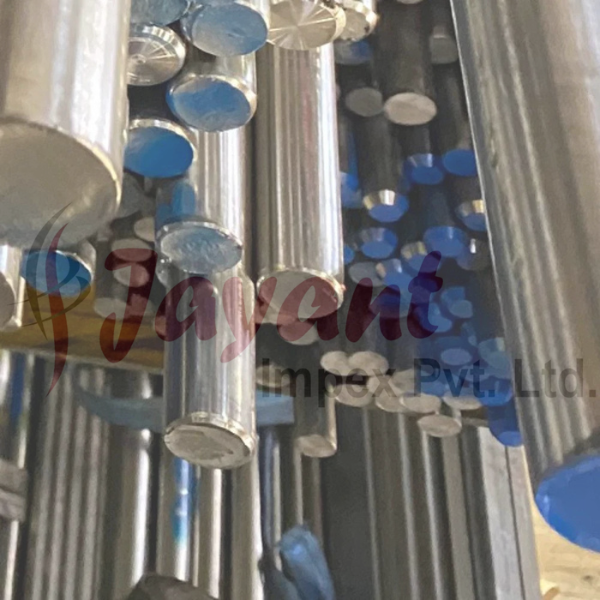
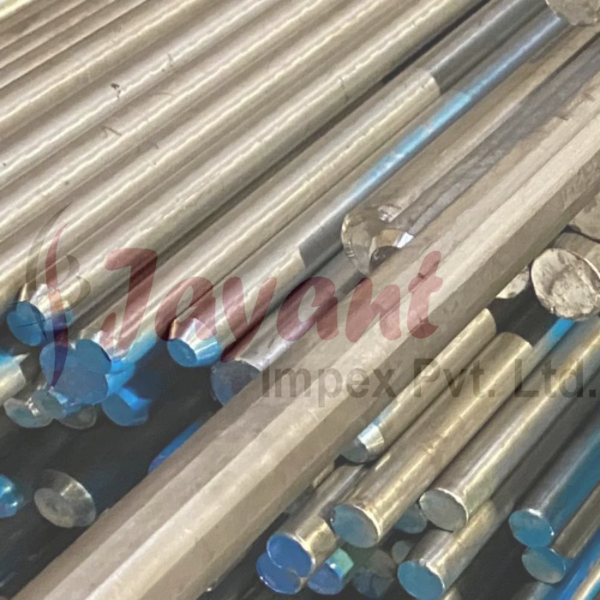
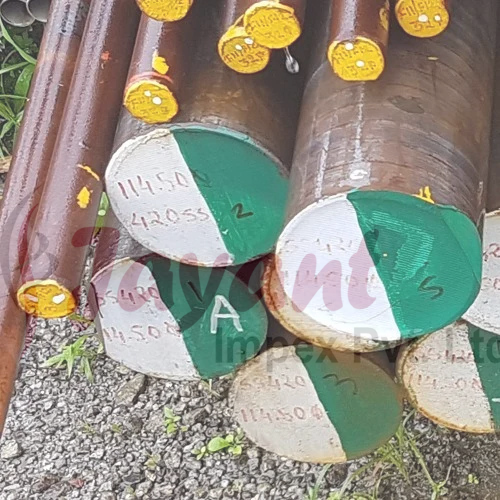
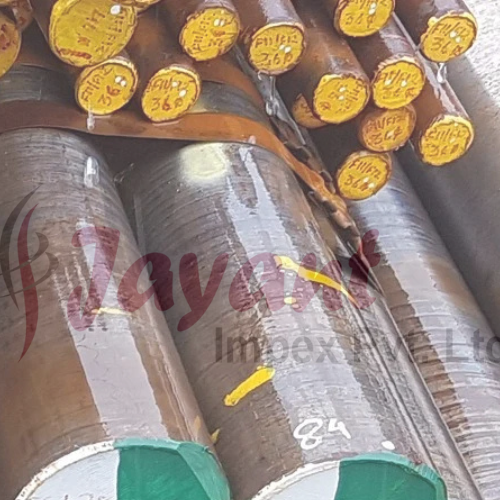
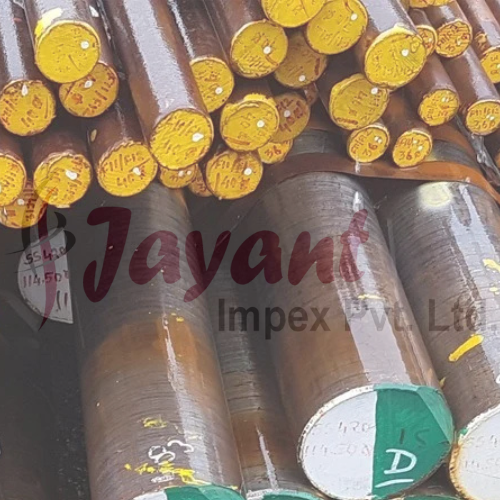
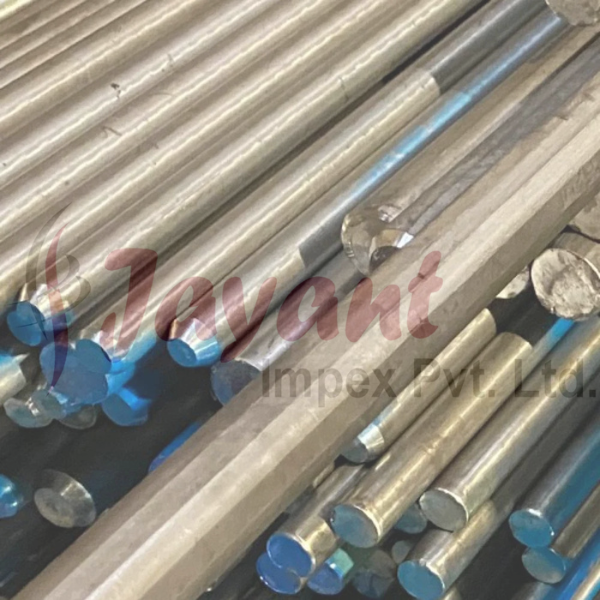
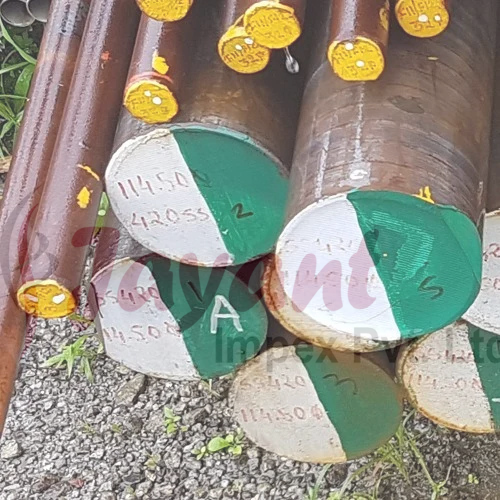
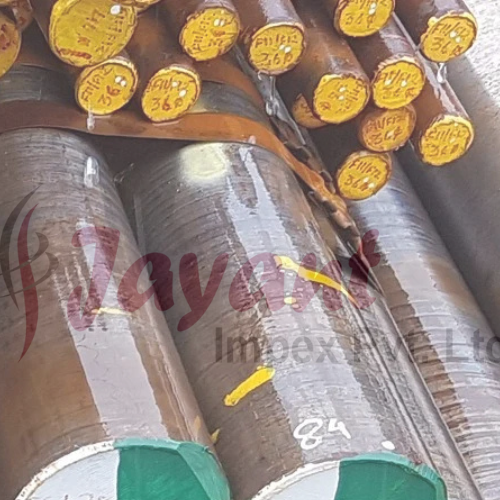
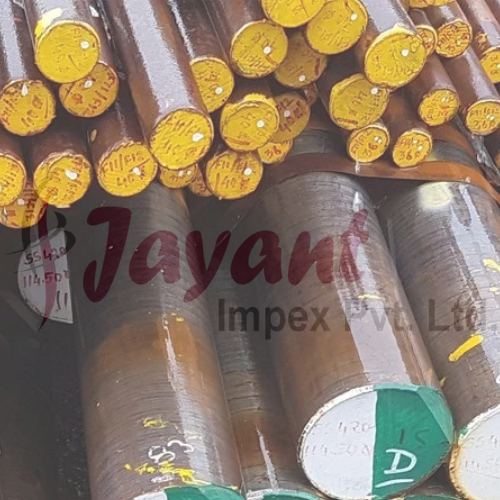
Chrome Moly 40NiCrMo7 Alloy Steel Bars
85.0 INR/Kilograms
Product Details:
- Diameter 16mm - 250mm
- Grade 40NiCrMo7
- Standard DIN 40NiCrMo7, EN 10083-3
- Tolerance H9, H11, K12 or as required
- Material Chrome Moly 40NiCrMo7 Alloy Steel
- Application Automotive Components, Shafts, Gears, Machinery Parts
- Length 2 - 6 meters (customized available)
- Click to view more
X
Chrome Moly 40NiCrMo7 Alloy Steel Bars Price And Quantity
- 85.0 INR/Kilograms
- 1 Kilograms
Chrome Moly 40NiCrMo7 Alloy Steel Bars Product Specifications
- Engineering and Heavy Duty Equipment Manufacturing
- Bright / Black / Peeled
- Bars / Rods
- Hot Rolled / Forged / Peeled
- Heat Treated & Tempered (QT)
- 2 - 6 meters (customized available)
- Automotive Components, Shafts, Gears, Machinery Parts
- Chrome Moly 40NiCrMo7 Alloy Steel
- H9, H11, K12 or as required
- DIN 40NiCrMo7, EN 10083-3
- 40NiCrMo7
- 16mm - 250mm
- Polished, Smooth, Free from surface defects
- Good machinability after annealing
- Nickel, Chromium, Molybdenum enhanced for high strength
- Min. 850 MPa (varies with heat treatment)
- Moderate, suitable for lubricated applications
- Min. 1100 MPa (varies with heat treatment)
- High notch toughness
- 25-34 HRC (as per request)
- Plastic caps / Painted ends
- Round, Square, Hexagonal or as per requirement
- Annealed / Hardened & Tempered
Product Description
40NiCrMo7 (often designated under European standards as 1.6562 or 40NiCrMo7-3) is an ultra-high-strength, deep-hardening Nickel-Chromium-Molybdenum low-alloy steel. Within global material specifications, 40NiCrMo7 bars serve as a premium baseline equivalent to the widely recognized North American AISI 4340 standard, but with tightly controlled European compositional parameters.
Engineered specifically for heavy-duty applications where parts face massive continuous loads, extreme torsional forces, and cryogenic shocks, this triple-alloy steel provides unmatched section-depth hardenability.
1. Chemical Formula Breakdown
The elite status of 40NiCrMo7 bars lies in its substantial Nickel ($1.60% - 2.00%$) content paired with strategic chromium and molybdenum windows:
| Element | Composition (%) | Primary Metallurgical Contribution |
| Carbon (C) | $0.37% - 0.44%$ | Provides high baseline tensile strength and deep response to quenching. |
| Nickel (Ni) | $1.60% - 2.00%$ | Delivers massive deep-core through-hardening and exceptional low-temperature fracture toughness. |
| Chromium (Cr) | $0.60% - 0.90%$ | Enhances surface hardness depth and improves abrasive wear resistance. |
| Molybdenum (Mo) | $0.15% - 0.30%$ | Eliminates temper brittleness and maintains high creep resistance up to $sim 450^circtext{C}$. |
| Manganese (Mn) | $0.50% - 0.85%$ | Functions as a fundamental deoxidizer and stabilizes phase transformations. |
| Silicon (Si) | $le 0.40%$ | Increases the overall yield point and structural elasticity. |
2. Eliminating the "Slack Quench" in Massive Cross-Sections
The primary vulnerability of standard chrome-moly steels like 42CrMo4 (AISI 4140) is their loss of core properties in thicker geometries. If a bar exceeds 80 mm in diameter, the center cannot cool fast enough during quenching, leaving a soft core.
The $Ni-Cr-Mo$ triple alloy formulation in 40NiCrMo7 delays the internal phase transformation during cooling. This allows bars up to 150 mm to 200 mm in diameter to fully transform into a uniform, high-strength martensitic structure from the outer surface straight through to the core center.
3. Mechanical Properties vs. Size (+QT Condition)
When 40NiCrMo7 bars are ordered or treated to the standard Quenched & Tempered (+QT) state (oil quenched at $820^circtext{C} - 850^circtext{C}$ and tempered at $550^circtext{C} - 650^circtext{C}$), the mechanical strength remains highly robust even as bar sizes scale:
-
Small Bars ($le$ 16 mm): Ultimate Tensile Strength ($R_m$) reaches 1180 1370 MPa with a minimum Yield Strength ($R_e$) of 980 MPa.
-
Medium Bars (40 mm 100 mm): Tensile strength shifts to 980 1180 MPa with a minimum yield of 780 MPa.
-
Large Bars (100 mm 160 mm): Tensile strength measures 880 1080 MPa with a minimum yield of 690 MPa.
-
Massive Bars (160 mm 250 mm): Maintains a highly competitive tensile strength of 830 980 MPa with a minimum yield of 640 MPa.
4. Specialized Low-Temperature Performance (ASTM A320 L43)
A distinct and critical application niche for 40NiCrMo7 is its official integration into the ASTM A320 Grade L43 specification for low-temperature bolting and fasteners.
-
While standard steels turn completely brittle and fracture under subzero service, the high nickel content in 40NiCrMo7 keeps the material ductile.
-
It is guaranteed to maintain a minimum impact energy of 27 Joules at a cryogenic -101C, making it standard practice for securing pressure vessels, valves, and pipelines in arctic or liquid-gas environments.
5. Main Technical Applications
Thanks to its extreme structural reliability, 40NiCrMo7 round and forged bars are machined into:
-
Power & Energy Exploration: Hydroelectric turbine shafts, large drive gears, generator rotors, and high-pressure subsea couplings.
-
Aerospace & Defense: Military and commercial aircraft landing gear cylinders, high-stress structural airframe pins, and propeller hubs.
-
Internal Combustion: Heavy-duty marine or locomotive engine crankshafts, connecting rods, and camshafts.
6. Seamless Global Cross-References
If you are translating international engineering blueprints or evaluating factory Mill Test Certificates (MTCs), 40NiCrMo7 aligns with these premium global grades:
-
USA: AISI 4340 / SAE 4340 / UNS G43400 / ASTM A320 L43
-
Germany / Europe: DIN 1.6562 / 40NiCrMo8-4 (and close sister 1.6582 / 34CrNiMo6)
-
United Kingdom: BS 817M40 (Classic EN24 / EN24A)
-
Japan: JIS SNCM439
-
Russia: GOST 40KhN2MA (402)
-
China: GB 40CrNiMoA
7. Machining & Fabrication Reality
Technical Sourcing Notes
Machinability: In its fully hardened (+QT) structural state, it sits at roughly 320 HBW ($sim$34 HRC) and requires rigid CNC setups and high-quality carbide tooling. For elaborate gear cutting or deep gundrilling, it is highly recommended to source the bars in the Soft Annealed (+A) condition ($le$ 269 HBW) and heat-treat post-machining.
Welding Sensitivity: Due to its exceptional hardenability and high carbon equivalent, 40NiCrMo7 is highly sensitive to cold cracking. Structural welding is generally prohibited. If welding must be performed for component repair, mandatory preheating to $300^circtext{C}$, low-hydrogen consumables, and an immediate Post-Weld Heat Treatment (PWHT) are absolute requirements to protect the heat-affected zone (HAZ).
Superior Mechanical Properties for Demanding Applications
The 40NiCrMo7 alloy steel bars boast outstanding mechanical performance, including a minimum yield strength of 850 MPa and tensile strength above 1100 MPa, depending on the heat treatment. This makes them highly dependable for critical engineering and heavy-duty operations, ensuring reliability and safety even under strenuous conditions.
Customized Dimensions and Finishes
With diameters from 16mm to 250mm and lengths between 2 and 6 meters, these bars can be tailored to precise industrial specifications. Finishes such as bright, black, and peeled are available, along with various tolerance levels (H9, H11, K12), ensuring each product fits unique operational needs with consistent quality.
Versatile Manufacturing and Supply Solutions
As a comprehensive dealer, manufacturer, exporter, and supplier based in India, we offer Chrome Moly 40NiCrMo7 alloy steel bars for a variety of sectors. End protection options such as plastic caps or painted ends ensure quality on delivery, while strict adherence to international standards guarantees performance and compliance.
FAQ's of Chrome Moly 40NiCrMo7 Alloy Steel Bars:
Q: How are Chrome Moly 40NiCrMo7 Alloy Steel Bars processed for optimal mechanical properties?
A: These steel bars are processed through heat treatment methods such as annealing, hardening, and tempering (often referred to as quenching and tempering). These processes are tailored to achieve the desired hardness (25-34 HRC) and mechanical strengths, including high yield and tensile strength, as required by specific engineering applications.Q: What benefits do the nickel, chromium, and molybdenum alloying elements provide?
A: Nickel, chromium, and molybdenum content significantly enhance the steel's strength, toughness, and resistance to wear. They offer improved notch toughness for impact resistance and contribute to moderate corrosion resistance, especially beneficial for lubricated or protected applications.Q: When should I choose a specific bar shape like round, square, or hexagonal?
A: Selecting a particular bar shape depends on the intended application. Round bars are ideal for shafts and mechanical parts, square bars are suitable for structural or support components, and hexagonal bars are commonly used in fasteners or applications requiring high torque.Q: Where are Chrome Moly 40NiCrMo7 Alloy Steel Bars commonly utilized?
A: These bars are widely used in automotive components, gear manufacturing, machinery parts, and heavy equipment engineering due to their excellent strength, impact resistance, and consistent machinability.Q: What is the typical process to ensure the bars are free from surface defects?
A: The bars undergo surface finishing processes such as polishing or peeling, which remove surface imperfections and deliver a smooth, defect-free finish. Regular inspections also ensure compliance with quality standards before shipment.Q: How can these steel bars be customized to meet specific industrial requirements?
A: The bars can be produced in various sizes, shapes, and finishes, with tolerances such as H9, H11, or K12 according to customer requirements. Custom length, heat treatment type, and end protection are also available to adapt to unique project needs.Tell us about your requirement

Price:
Quantity
Select Unit
- 50
- 100
- 200
- 250
- 500
- 1000+
Additional detail
Mobile number
Email

Other Products in 'Steel Bar' category


JAYANT IMPEX
GST : 27AAQFJ5764L1ZJ
GST : 27AAQFJ5764L1ZJ

- 6th, 605, Majestic Shopping Center, Jagannath Shankarseth Road, Girgaon,Mumbai - 400004, Maharashtra, India
- Phone : 08045800544

- Mr Shrenik Prakash Mehta (Director)
- Mobile : 08045800544
-
jayantimpex12@gmail.com


-
Share to



 Send Inquiry
 Send SMS
 Call Me Free
JAYANT IMPEX PVT. LTD. All Rights Reserved.(Terms of Use)
Developed and Managed by Infocom Network Private Limited. Terms of use | Returns Policy Member
Developed and Managed by Infocom Network Private Limited. Terms of use | Returns Policy Member
