 English
 Spanish
 French
 German
 Italian
 Chinese (Simplified)
 Japanese
 Korean
 Arabic
 Portuguese
 Call Us : 08045800544
 Call Us : 08045800544
 Get a Quote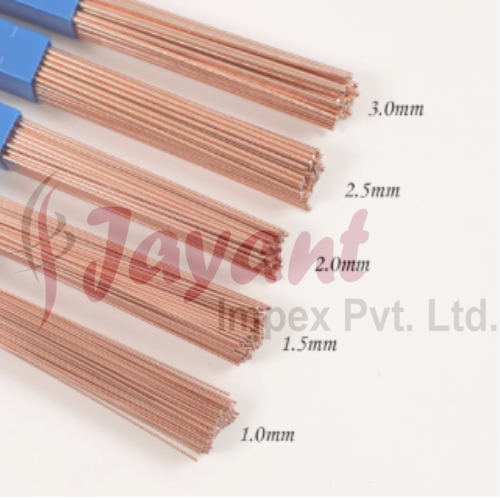
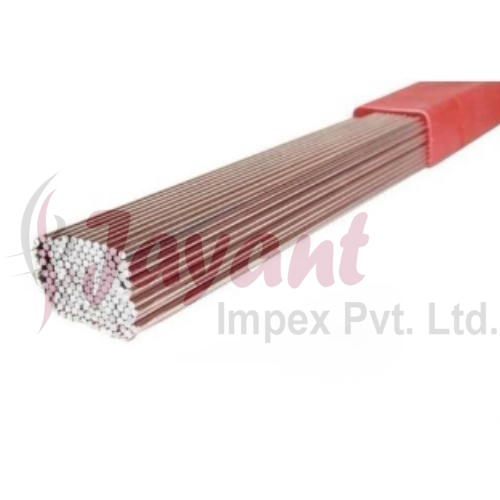
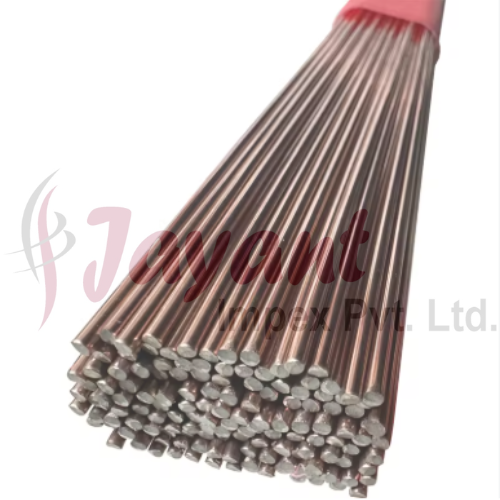
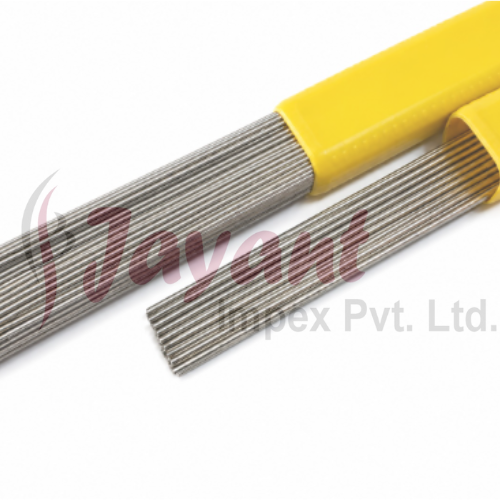
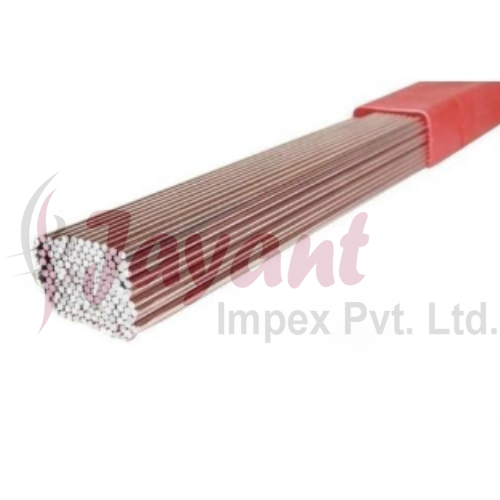
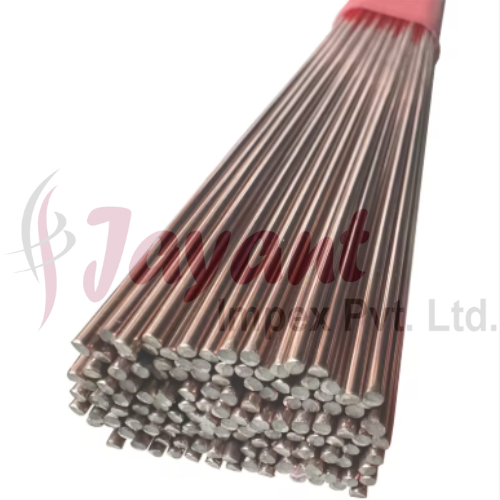
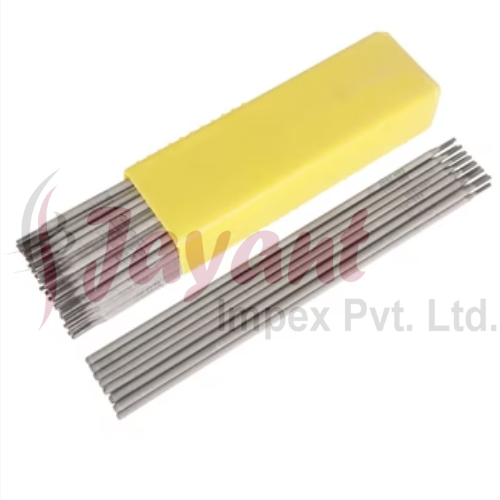
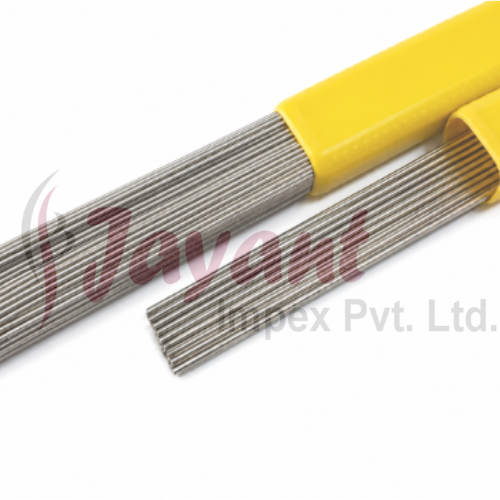
Copper Welding Wire Rod (TIG, MIG)
600.0 INR/Unit
Product Details:
- Surface Treatment Bright finish, Cleaned
- Tensile Strength 200-300 MPa
- Load Capacity Suitable for standard welding loads
- Diameter 1.0 mm, 1.5 mm, 2.0 mm, 2.5 mm, 3.0 mm
- Grade Premium Copper (usually ETP or DHP grade)
- Corrosion Resistant Yes
- Shape Round Rod
- Click to view more
X
Copper Welding Wire Rod (TIG, MIG) Price And Quantity
- 20 Unit
- 600.0 INR/Unit
Copper Welding Wire Rod (TIG, MIG) Product Specifications
- Bright finish, Cleaned
- 200-300 MPa
- 1.0 mm, 1.5 mm, 2.0 mm, 2.5 mm, 3.0 mm
- Suitable for standard welding loads
- Premium Copper (usually ETP or DHP grade)
- Yes
- Round Rod
- Smooth, Polished
- Straight Cut Rod
- TIG and MIG welding, Fabrication, Repair, Manufacturing
- 0.02 mm
- Industrial Welding Use (custom packaging on request)
- Excellent electrical and thermal conductivity, Uniform composition
- 60-90 HRB
- 1.0 mm to 3.0 mm
- AWS A5.7, BS EN ISO 24373
- Welding Rod
- Copper
- Plastic Tube, OEM Packing Optional
- Compatible with multiple base metals (copper, brass, bronze alloys)
- Copper
- Available for Bulk and Retail Orders
- >97% IACS
- Typically 1 Meter (Custom Lengths on Request)
- 1085C (Copper)
- >35%
Product Description
Copper and Copper-Alloy Welding Wire & Rods (AWS A5.7 / EN ISO 24373) cover a range of filler metals used for TIG (GTAW) and MIG (GMAW) welding of pure copper, copper-nickel, aluminum bronzes, and brasses, as well as overlaying steel for corrosion and wear resistance.
The most common primary grades fall into Pure Pure Copper (Deoxidized Copper), Silicon Bronze, and Aluminum Bronze categories depending on strength, electrical conductivity, and fluidity requirements.
Key Copper Filler Metal Grades
1. ERCu (Deoxidized Copper / Cu-DPE)
-
Designation: EN ISO 24373 Cu1860 (CuSn0.6) or Cu1861 (CuSi0.5)
-
Composition: ~98.0 to 99.5 percent Copper, with small additions of Silicon (Si) or Tin (Sn) and Phosphorus (P) as deoxidizers to prevent porosity.
-
Primary Use: Welding deoxidized pure copper (DHP, DLP), oxygen-free copper, and electrical bus bars where maximum thermal and electrical conductivity is required.
2. ERCuSi-A (Silicon Bronze / CuSi3)
-
Designation: EN ISO 24373 Cu6560 (CuSi3Mn1)
-
Composition: ~3 percent Silicon, ~1 percent Manganese, Balance Copper.
-
Primary Use: Welding copper-silicon alloys, galvanised steel sheet (MIG brazing), brasses, and plain carbon steel to copper. Offers lower melting temperature, excellent arc stability, and fluid weld pools.
3. ERCuAl-A2 (Aluminum Bronze)
-
Designation: EN ISO 24373 Cu6100 (CuAl8)
-
Composition: ~8.5 to 11.0 percent Aluminum, 1.5 percent Iron max, Balance Copper.
-
Primary Use: Welding aluminum bronze alloys, high-strength joinings of copper to steel, seawater marine valves, propellers, and wear-resistant hardfacing overlays.
Typical Chemical Composition & Comparison
| Grade | AWS Class | EN ISO Class | Main Alloy Elements (%) | Primary Attribute |
| Pure Copper | ERCu | Cu 1860 | Cu >= 98.0%, Sn ~0.8%, P ~0.15% | High Electrical & Thermal Conductivity |
| Silicon Bronze | ERCuSi-A | Cu 6560 | Si ~3.0%, Mn ~1.0%, Cu Bal. | Easy Flow, Low Melting Point, MIG Brazing |
| Aluminum Bronze | ERCuAl-A2 | Cu 6100 | Al ~9.0%, Fe ~1.0%, Cu Bal. | High Strength, Cavitation & Corrosion Resistance |
Mechanical & Physical Properties (Typical As-Welded)
-
Tensile Strength:
-
ERCu: 200 to 220 MPa (29 to 32 ksi)
-
ERCuSi-A: 340 to 380 MPa (50 to 55 ksi)
-
ERCuAl-A2: 450 to 550 MPa (65 to 80 ksi)
-
-
Electrical Conductivity (% IACS):
-
ERCu: 30 to 40 percent (higher if using unalloyed oxygen-free grade)
-
ERCuSi-A: ~8 percent
-
ERCuAl-A2: ~12 percent
-
-
Melting Range: 950 to 1080 degrees Celsius (varies depending on silicon/aluminum alloy content)
Technical Considerations & Welding Process Rules
-
Preheating Requirements: Pure copper has an exceptionally high thermal conductivity (roughly 10 times higher than carbon steel). For plate thicknesses exceeding 3 mm, preheating to 300 to 500 degrees Celsius is necessary to prevent severe cold-lapping and lack of fusion.
-
Shielding Gas Selection:
-
100 percent Argon (I1): Standard for thin sections up to 3 mm.
-
Argon/Helium or 100 percent Helium (I3): Required on heavier sections (>6 mm) to generate the extreme heat input required to offset copper's heat dissipation.
-
-
Porosity Control: Oxygen-bearing coppers (ETP / Electrolytic Tough Pitch) are prone to hydrogen embrittlement and steam-porosity when welded. Use deoxidized copper base materials (DHP/DLP) and filler rods containing active deoxidizers (Si, Sn, P).
Industry Classifications & Packaging Specifications
-
AWS Standards: AWS A5.7 / A5.7M (Copper and Copper-Alloy Bare Welding Rods and Electrodes)
-
EN ISO Standards: EN ISO 24373
-
Werkstoff-Nr. (WNr): 2.1211 (CuSn0.6), 2.1461 (CuSi3Mn), 2.0921 (CuAl8)
-
Available Product Forms:
-
MIG Wire: 0.8 mm, 1.0 mm, 1.2 mm, 1.6 mm spools (D200, D300)
-
TIG Rods: 1.6 mm, 2.0 mm, 2.4 mm, 3.2 mm, 4.0 mm cut lengths (1000 mm)
-
Precision and Performance in Every Rod
Manufactured under stringent quality protocols, our copper welding rods deliver consistent conductivity, excellent elongation, and a bright, clean finish for effortless welding. The smooth surface and uniform composition ensure dependable results in both industrial and smaller-scale projects, supporting various fabrication needs.
Tailored for TIG and MIG Welding
Our rods are specifically designed to excel in TIG and MIG processes, compatible with copper, brass, and bronze alloys. The straight cut and standard round shape ensure easy handling and efficient feed during welding, making them suitable for precision work as well as heavy-duty industrial use.
Flexible Supply and Customization
We cater to all requirements, whether bulk orders or retail needs, offering custom packaging, lengths, and prompt delivery. Our distribution network spans manufacturers, retailers, and fabricators throughout India, ensuring timely service and product availability tailored to your application and throughput demands.
FAQ's of Copper Welding Wire Rod (TIG, MIG):
Q: How should I select the appropriate diameter of Copper Welding Wire Rod for my application?
A: The choice of diameter-ranging from 1.0 mm to 3.0 mm-depends on factors such as joint size, base metal thickness, and the required weld strength. For thinner metals or precise TIG work, opt for finer rods, while larger diameters are suitable for heavy-duty jobs in manufacturing and repair.Q: What makes these copper welding rods compatible with multiple base metals?
A: Our rods are crafted from high-grade copper (ETP or DHP) and adhere to strict composition standards, making them suitable for welding with copper, brass, and bronze alloys. This ensures versatile application in various industries and fabrication projects.Q: When is it advisable to request custom lengths or packaging for copper welding rods?
A: Custom lengths and OEM packaging are recommended when you have specialized applications, storage constraints, or branding requirements. We accommodate such requests for both bulk purchases and retail orders to support unique fabrication needs.Q: Where can I purchase these Copper Welding Wire Rods in India?
A: Our products are available through a nationwide dealer, exporter, fabricator, manufacturer, producer, retailer, supplier, and trader network. For inquiries or to place an order, please contact your nearest distributor or reach out directly to us.Q: What benefits do these premium copper rods offer over standard options?
A: Our copper welding rods provide excellent electrical and thermal conductivity (>97% IACS), high elongation (>35%), uniform composition, and corrosion resistance. The smooth polished finish ensures easy handling and clean welds-critical for professional fabrication and repair.Q: How should Copper Welding Wire Rods be stored and handled to maintain quality?
A: Store rods in the provided plastic tube or customized packaging in a dry, clean environment to prevent contamination and oxidation. Handle with clean, dry gloves to retain the bright, polished finish, especially before critical TIG or MIG welding operations.Q: What industries commonly use these copper welding rods, and for what processes?
A: These rods are extensively used for TIG and MIG welding in electrical manufacturing, HVAC fabrication, equipment repair, and construction industries due to their reliability, conductivity, and compatibility with common copper-based alloys.Tell us about your requirement

Price:
Quantity
Select Unit
- 50
- 100
- 200
- 250
- 500
- 1000+
Additional detail
Mobile number
Email

Other Products in 'Industrial Fastener' category


JAYANT IMPEX
GST : 27AAQFJ5764L1ZJ
GST : 27AAQFJ5764L1ZJ

- 6th, 605, Majestic Shopping Center, Jagannath Shankarseth Road, Girgaon,Mumbai - 400004, Maharashtra, India
- Phone : 08045800544

- Mr Shrenik Prakash Mehta (Director)
- Mobile : 08045800544
-
jayantimpex12@gmail.com


-
Share to



 Send Inquiry
 Send SMS
 Call Me Free
JAYANT IMPEX PVT. LTD. All Rights Reserved.(Terms of Use)
Developed and Managed by Infocom Network Private Limited. Terms of use | Returns Policy Member
Developed and Managed by Infocom Network Private Limited. Terms of use | Returns Policy Member
