 English
 Spanish
 French
 German
 Italian
 Chinese (Simplified)
 Japanese
 Korean
 Arabic
 Portuguese
 Call Us : 08045800544
 Call Us : 08045800544
 Get a Quote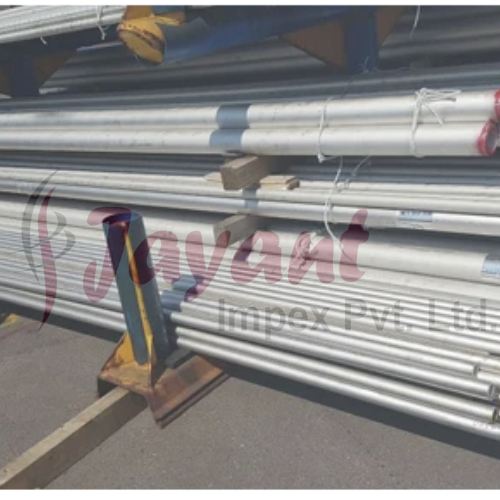
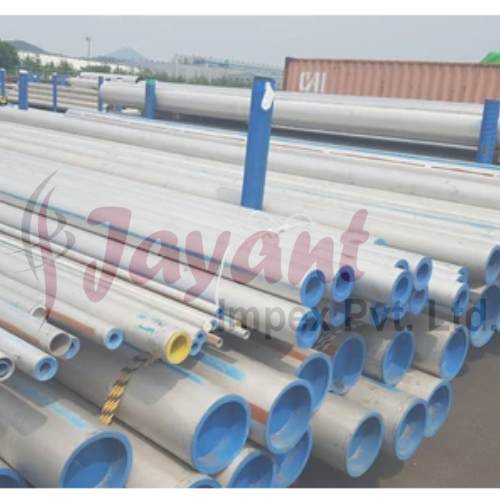
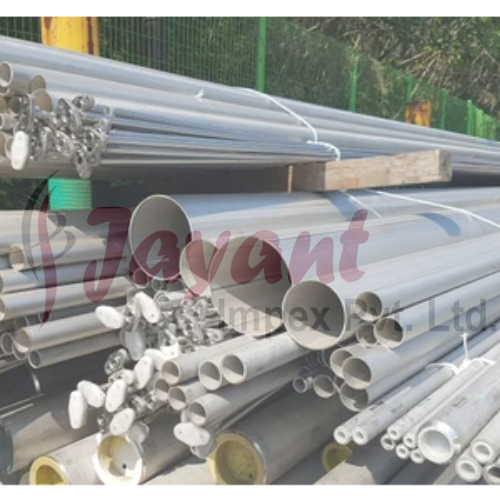
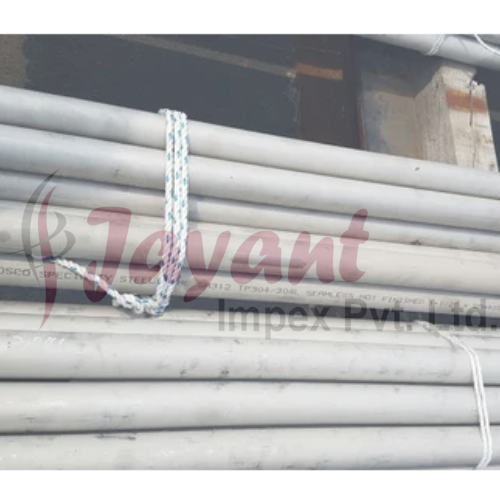
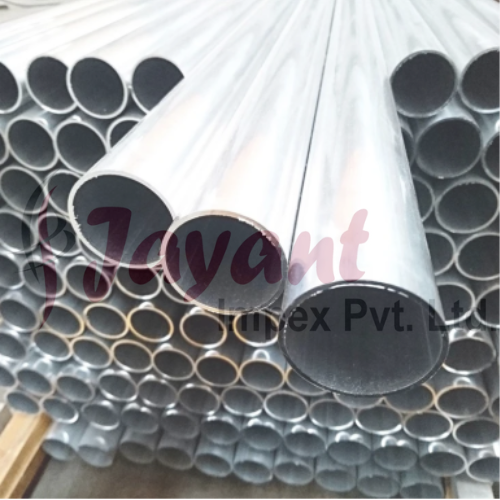
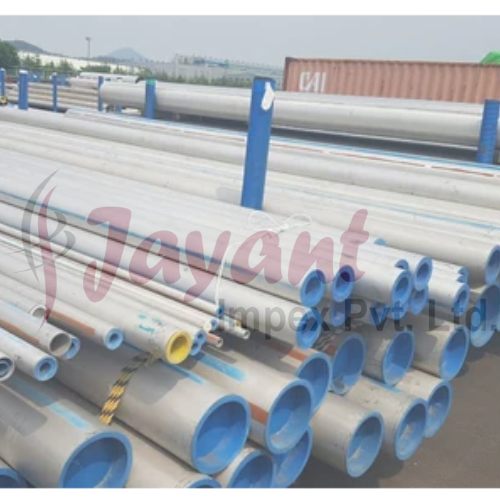
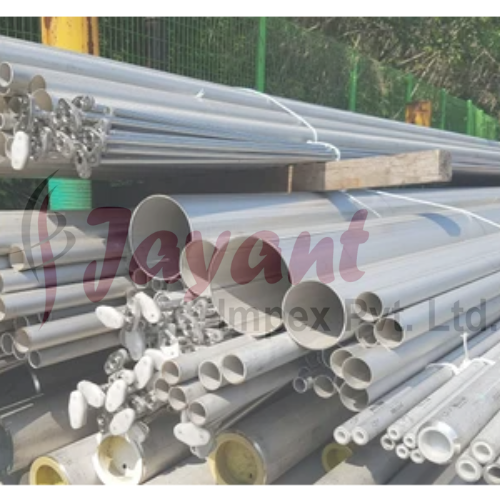
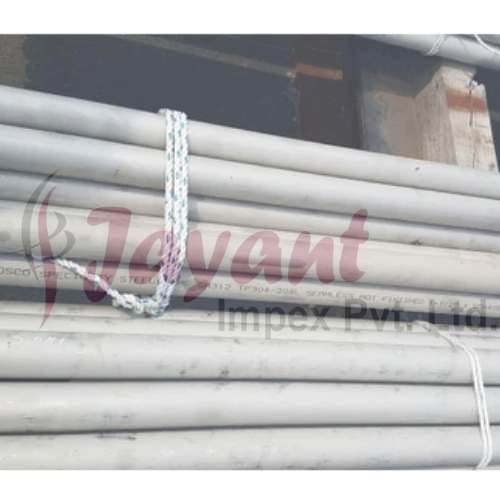
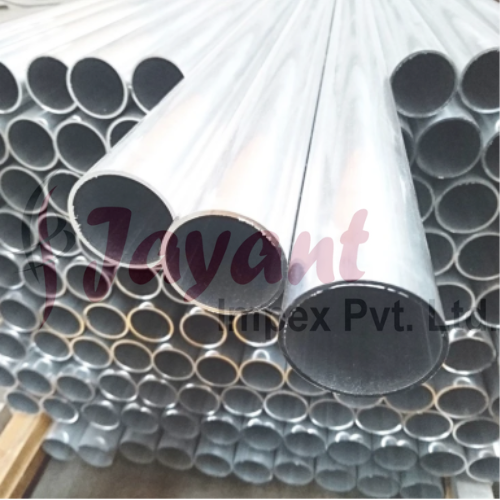
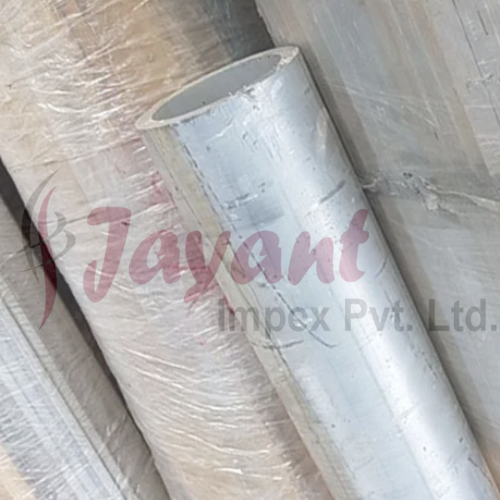
321 Stainless Steel Pipe
300.0 INR/Piece
Product Details:
- Connection Type Butt Weld / Threaded / Socket Weld
- Flexibility Rigid
- Thread Type NPT / BSP (for threaded pipes)
- Diameter 6 mm to 600 mm
- Bend Radius As per application, standard pipe bending
- Tolerance 0.1 mm
- Sealing Type Metal to Metal
- Click to view more
X
321 Stainless Steel Pipe Price And Quantity
- 300.0 INR/Piece
- 1 Piece
321 Stainless Steel Pipe Product Specifications
- Metal to Metal
- As per application, standard pipe bending
- 6 mm to 600 mm
- Industrial, Chemical, Petrochemical, Construction
- 6 mm - 600 mm
- 0.1 mm
- Fluid Transport, Structural, Heat Exchangers
- Standard & Customized (up to 6 meters or as required)
- Welded / Seamless
- ASTM A312 / A213
- Uncoated / As per request
- 205 MPa minimum
- Up to 400 Bar (depending on size and thickness)
- -196C to 800C
- 515 MPa minimum
- 321 Stainless Steel
- 1 mm - 20 mm
- Round
- Silver / Metallic
- Round
- Rigid
- NPT / BSP (for threaded pipes)
- Stainless Steel Pipe
- Polished / Pickled
- Butt Weld / Threaded / Socket Weld
- Stainless Steel
- 217 HB Max
- Plastic Caps / Beveled Ends
- Matt / Bright / Mirror Finish (Optional)
- Cutting, Bending, Welding, Punching, Decoiling
- Annealed
- Excellent, especially against intergranular corrosion
- 8.0 g/cm3
- Wooden Cases / Bundles with Strapping
Product Description
Technical Overview: AISI 321 vs. Standard Austenitics
-
Titanium Stabilization: Ti content is tied to carbon ($\text{Ti} = 5 \times (\text{C} + \text{N}) \text{ min}$ up to $0.70\%$), preferentially forming titanium carbides rather than chromium carbides during heating.
-
Welding Advantage: Eliminates the need for post-weld annealing when operating in elevated temperature or corrosive service environments.
-
High-Temperature Performance: Higher creep rupture strength and stress rupture properties compared to SS 304 or SS 304L above $1000^\circ\text{F}$ ($538^\circ\text{C}$).
-
Primary Applications: Aircraft exhaust manifolds, expansion joints, furnace components, heat exchanger tubes, and high-temperature chemical process lines.
-
Key Properties
-
Intergranular Corrosion Resistance: The titanium addition binds with carbon to form titanium carbides instead of chromium carbides. This prevents "weld decay" and intergranular corrosion in the critical temperature range ($427^\circ\text{C}$ to $816^\circ\text{C}$ / $800^\circ\text{F}$ to $1500^\circ\text{F}$).
-
High-Temperature Performance: Retains high creep strength, stress rupture capability, and scaling resistance in continuous service up to $900^\circ\text{C}$ ($1650^\circ\text{F}$).
-
Weldability & Formability: Highly weldable using standard fusion methods (typically welded using 347 filler wire). Unlike Grade 304, it does not require post-weld annealing to restore corrosion resistance.
-
Non-Magnetic: Austenitic structure (non-magnetic in the annealed state, though it can become slightly magnetic when cold-worked).
Chemical Composition (Typical Weight %)
Element Content (%) Chromium (Cr) 17.0 19.0% Nickel (Ni) 9.0 12.0% Titanium (Ti) $5 \times \text{C min}$ (up to 0.70% max) Carbon (C) 0.08% max (for 321H: 0.04 0.10%) Manganese (Mn) 2.0% max Silicon (Si) 1.0% max Iron (Fe) Balance
Common Mechanical Properties (Annealed)
-
Tensile Strength: $\ge 515\text{ MPa}$ ($75\text{ ksi}$)
-
Yield Strength (0.2% Proof): $\ge 205\text{ MPa}$ ($30\text{ ksi}$)
-
Elongation: $\ge 40\%$
-
Hardness: $\le 217\text{ HB}$ / $95\text{ HRB}$
Typical Applications
-
Aerospace & Automotive: Aircraft exhaust manifolds, jet engine parts, engine headers, and catalytic converter tubing.
-
Oil, Gas & Petrochemical: Refinery equipment, flare stacks, thermal oxidizers, and high-temperature chemical transport lines.
-
Power Generation: Boiler superheaters, steam headers, and furnace components.
-
Industrial Equipment: Heat exchanger tubing, expansion joints, and bellows.
Common Specifications & Product Types
-
Specifications: ASTM A312 / ASME SA312 (Seamless, Welded, and Heavily Cold Worked Pipe), ASTM A269 (Tubing).
-
321 vs. 321H: Grade 321H (UNS S32109) has a higher controlled carbon content ($0.04\text{--}0.10\%$) designed for even higher creep strength at temperatures above $537^\circ\text{C}$ ($1000^\circ\text{F}$).
-
Tell us about your requirement

Price:
Quantity
Select Unit
- 50
- 100
- 200
- 250
- 500
- 1000+
Additional detail
Mobile number
Email

Other Products in 'Pipes' category

JAYANT IMPEX
GST : 27AAQFJ5764L1ZJ
GST : 27AAQFJ5764L1ZJ

- 6th, 605, Majestic Shopping Center, Jagannath Shankarseth Road, Girgaon,Mumbai - 400004, Maharashtra, India
- Phone : 08045800544

- Mr Shrenik Prakash Mehta (Director)
- Mobile : 08045800544
-
jayantimpex12@gmail.com


-
Share to



 Send Inquiry
 Send SMS
 Call Me Free
JAYANT IMPEX PVT. LTD. All Rights Reserved.(Terms of Use)
Developed and Managed by Infocom Network Private Limited. Terms of use | Returns Policy Member
Developed and Managed by Infocom Network Private Limited. Terms of use | Returns Policy Member
