 English
 Spanish
 French
 German
 Italian
 Chinese (Simplified)
 Japanese
 Korean
 Arabic
 Portuguese
 Call Us : 08045800544
 Call Us : 08045800544
 Get a Quote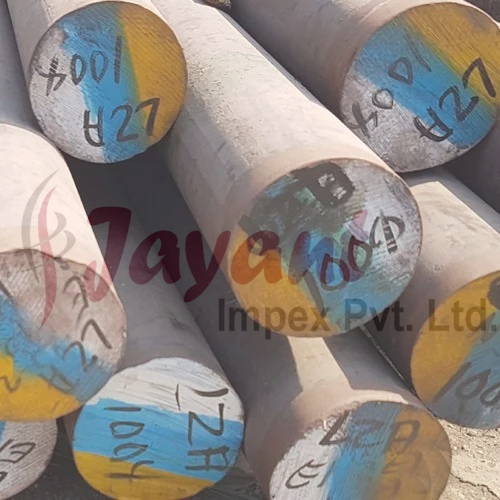
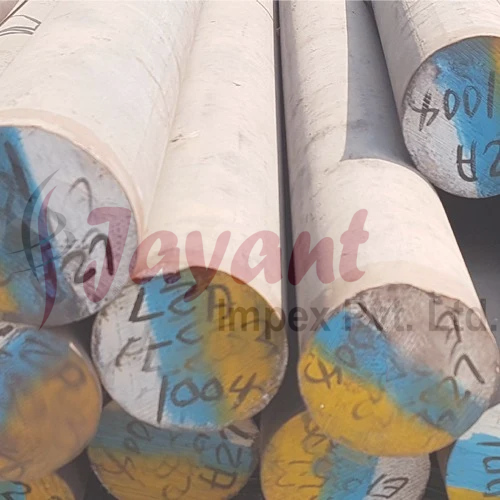
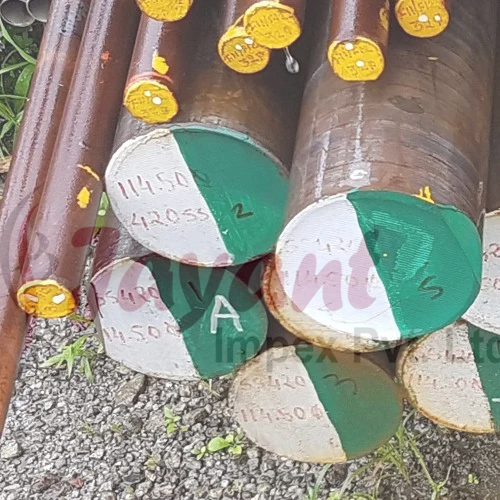
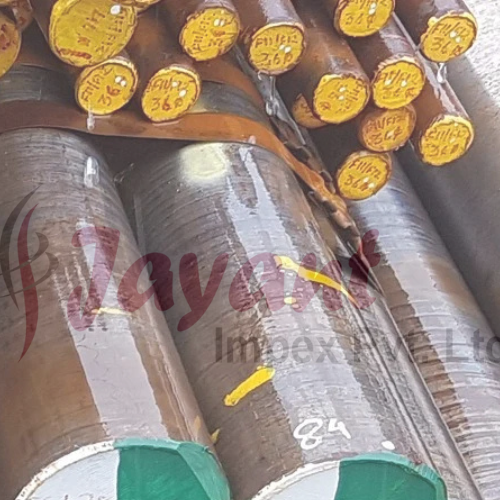
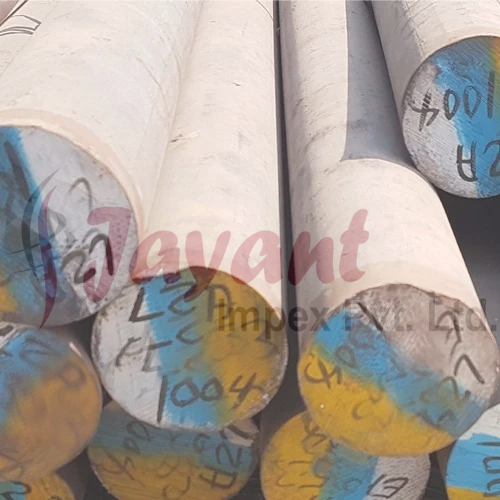
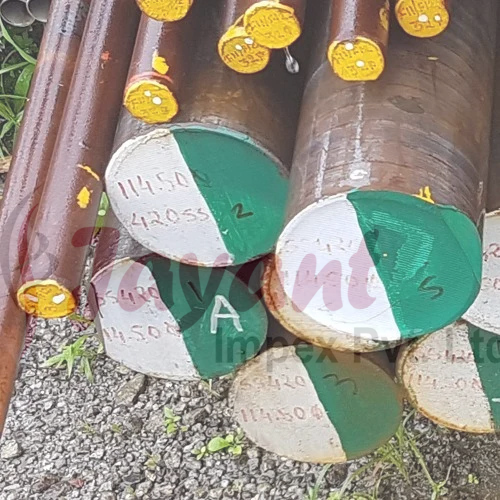
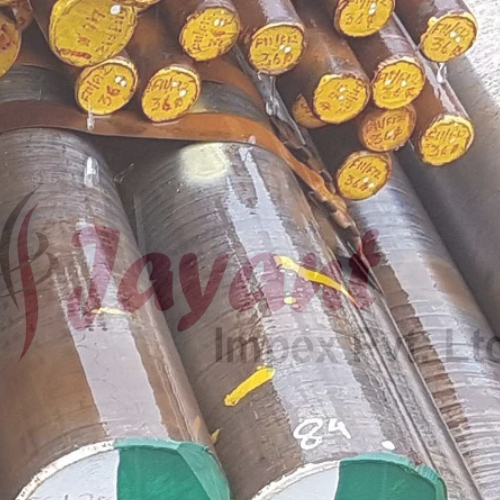
W.Nr. 55NiCrMoV6 Hot Die Steel Bars / 1.2713 Bar/ 55NiCrMoV6
152.0 INR/Kilograms
Product Details:
- Processing Hot Rolled / Forged
- Type Round Bars
- Diameter 16 mm - 800 mm
- Finish Black, Rough, Peeled, Turned, or Ground
- Application Die forging, hot working tools, die casting, shear blades, molds
- Material Hot Die Steel, W.Nr. 55NiCrMoV6, 1.2713, 55NiCrMoV6
- Length As per customer requirement (commonly up to 6000 mm)
- Click to view more
X
W.Nr. 55NiCrMoV6 Hot Die Steel Bars / 1.2713 Bar/ 55NiCrMoV6 Price And Quantity
- 152.0 INR/Kilograms
- 1 Kilograms
W.Nr. 55NiCrMoV6 Hot Die Steel Bars / 1.2713 Bar/ 55NiCrMoV6 Product Specifications
- Hot Die Steel, W.Nr. 55NiCrMoV6, 1.2713, 55NiCrMoV6
- Die forging, hot working tools, die casting, shear blades, molds
- Black, Rough, Peeled, Turned, or Ground
- Hot Rolled / Forged
- 16 mm - 800 mm
- Round Bars
- 1.2713 / 55NiCrMoV6
- Hot Rolled
- DIN 1.2713, W.Nr. 55NiCrMoV6
- As per customer requirement (commonly up to 6000 mm)
- Hot die/mould tools, industrial dies, heavy duty tools
- H9 / H11 / H13 or as required
- max 229 HB (annealed)
- Anti-rust oil coated
- C: 0.50-0.60%, Si: 0.10-0.40%, Mn: 0.40-0.80%, Cr: 1.00-1.30%, Mo: 0.15-0.35%, Ni: 1.40-1.80%, V: 0.05-0.15%
- Bars, Rods, Custom cut lengths
- As rolled/forged, Machined, Peeled or Ground
- Annealed to max 229 HB, With mill/inspection certificate EN 10204/3.1
- High impact resistance at elevated temperatures
- Round Bar / Rod
- Annealed, Hardened, Tempered
- Good machinability in annealed condition
Product Description
Overview of W.Nr. 1.2713 (55NiCrMoV6)
W.Nr. 1.2713 (standardized as 55NiCrMoV6) is a prominent nickel-chromium-molybdenum-vanadium alloy hot-work tool steel. It is the direct close relativeand immediate predecessor in standard selectionto the ubiquitous 1.2714 (55NiCrMoV7) grade.
While extremely similar in behavior, 1.2713 features a slightly lower chromium content and marginal differences in vanadium and molybdenum. It remains a premier choice for heavy-duty hot-forging die applications, prized for its excellent structural uniformity, high core toughness, and deep through-hardenability in massive cross-sections.
International Equivalent Grades
| Standard | Designation |
| DIN / W.Nr. | 1.2713 / 55NiCrMoV6 |
| AISI / ASTM (US) | L6 / ~6F3 |
| AFNOR (France) | 55NCDV6 |
| GOST (Russia) | 5KhNV (5) |
| JIS (Japan) | SKT4 (Close match) |
Chemical Composition: 1.2713 vs. 1.2714
Understanding the minor chemistry differences helps explain why these two grades are frequently cross-referenced or used interchangeably depending on regional mill availability:
| Element | W.Nr. 1.2713 (55NiCrMoV6) | W.Nr. 1.2714 (55NiCrMoV7) |
| Carbon (C) | 0.50% 0.60% | 0.50% 0.60% |
| Nickel (Ni) | 1.50% 1.80% | 1.50% 1.80% |
| Chromium (Cr) | 0.60% 0.90% (Lower) | 1.00% 1.30% (Higher) |
| Molybdenum (Mo) | 0.25% 0.35% | 0.40% 0.60% |
| Vanadium (V) | 0.05% 0.15% | 0.07% 0.15% |
The Technical Difference: The slightly higher Chromium and Molybdenum in 1.2714 gives it marginally better high-temperature wear resistance and temper resistance. However, 1.2713 counters with exceptional, unimpeded structural impact toughness because its lower carbide-forming content slightly reduces micro-segregation risk in the center of ultra-large forging blocks.
Core Properties
-
Extreme Resistance to Shock: The high nickel content acts as a major safeguard against brittle failure under the highly dynamic impact loads typical of drop-hammer operations.
-
Deep Hardenability: Thanks to the synergistic effect of Nickel, Chromium, and Molybdenum, this grade undergoes a uniform martensitic transformation deep into the core of thick bars and square blocks during quenching.
-
Resistance to Heat Checking: It easily accommodates the intense cyclic thermal stress (rapid heating from contact with hot billets followed by rapid cooling from lubricants) without developing deep premature thermal fatigue cracks.
Primary Applications
55NiCrMoV6 is supplied as forged round bars, flat bars, and rough-machined die blocks for heavy tool building:
-
Drop Hammer Dies: Particularly large die blocks where high impact toughness takes priority over pure abrasive wear resistance.
-
Hot Upsetting and Press Dies: Tooling inserts for mechanical presses processing steel, brass, or aluminum.
-
Forming Dies & Punchers: Hot work punches, piercing mandrels, and extrusion die holders.
-
Clamping Hardware: Heavy-duty industrial hardware exposed to elevated temperatures and cyclic tensile stresses.
Heat Treatment Parameters
Annealing
-
Temperature: 650C to 700C
-
Cooling: Slow furnace cooling down to roughly 600C at a controlled rate ($10^circtext{C} - 20^circtext{C}/text{hr}$), then air cool.
-
Delivery Hardness: Max 241 HBW.
Hardening
-
Preheating: Slow preheat stage at 600C 650C to prevent thermal stress fracturing.
-
Austenitizing Temperature: 820C to 860C
-
Quenching: Typically quenched in oil or warm chemical polymer baths. For less massive dimensions, forced air/gas quenching can be utilized to minimize dimensional distortion.
Tempering
-
Temperature: 530C to 630C based on the intended service environment.
-
Execution: Must be tempered at least twice with intermediate cooling to room temperature to guarantee stable transformation of retained austenite into tempered martensite.
-
Typical Operational Hardness: 36 to 48 HRC depending on whether toughness (lower hardness for hammers) or wear-resistance (higher hardness for press inserts) is preferred.
Exceptional Impact Strength for Demanding Applications
55NiCrMoV6 hot die steel bars are formulated to deliver high impact resistance, especially under elevated temperatures. This property makes them ideal for high-stress environments such as die forging, hot working tools, and die casting. The carefully controlled alloy composition ensures reliable performance and long-lasting durability in critical industrial roles.
Versatile Processing and Finishing Options
Clients can order 1.2713 steel bars in a variety of surface finishes: as rolled, forged, machined, peeled, or ground. This versatility enables manufacturers and fabricators to match the steel's form to their exact requirements, improving workability and reducing preparation time. Bars are available in custom lengths, with diameters ranging from 16mm to 800mm, and can be cut or processed per specification.
FAQ's of W.Nr. 55NiCrMoV6 Hot Die Steel Bars / 1.2713 Bar/ 55NiCrMoV6:
Q: How are W.Nr. 55NiCrMoV6 hot die steel bars typically processed and delivered?
A: These steel bars are processed using hot rolling or forging techniques and delivered in the annealed condition with a maximum hardness of 229 HB. Surface finishing options include as-rolled, forged, machined, peeled, or ground, and bars can be supplied with protective anti-rust oil coating.Q: What benefits does 55NiCrMoV6 steel offer for hot working tool applications?
A: 55NiCrMoV6 steel excels in hot work environments due to its high impact resistance, toughness at elevated temperatures, and good machinability in the annealed state. These features make it suitable for die forging, hot die tools, molds, and industrial dies.Q: When should customers consider using 1.2713 (55NiCrMoV6) round bars for their projects?
A: Customers should choose 1.2713 bars when they require durable hot die steel with reliable impact strength, especially for tools exposed to repeated heating and mechanical stress, such as in die casting or heavy-duty industrial applications.Q: Where are W.Nr. 55NiCrMoV6 bars commonly applied?
A: These bars are widely used in industries such as manufacturing, automotive, and tool making, specifically for die forging, hot working tools, die casting molds, and heavy-duty shear blades where high durability and toughness are essential.Q: What documentation and certification can be expected with this product?
A: Products are supplied with a mill or inspection certificate according to EN 10204/3.1 standard, ensuring full traceability and compliance with quality and chemical composition requirements.Q: How does the chemical composition of 1.2713 steel contribute to its performance?
A: Its alloying elements-including nickel, chromium, molybdenum, and vanadium-offer a blend of strength, toughness, high-temperature stability, and resistance to wear, optimizing the steel for demanding hot work applications.Q: What sizes and tolerances are available for 55NiCrMoV6 bars?
A: Bars are available in diameters from 16 mm to 800 mm, lengths up to 6000 mm or custom, and can be supplied in tolerances such as H9, H11, H13, or as specified by the client.Tell us about your requirement

Price:
Quantity
Select Unit
- 50
- 100
- 200
- 250
- 500
- 1000+
Additional detail
Mobile number
Email

Other Products in 'Steel Bar' category

JAYANT IMPEX
GST : 27AAQFJ5764L1ZJ
GST : 27AAQFJ5764L1ZJ

- 6th, 605, Majestic Shopping Center, Jagannath Shankarseth Road, Girgaon,Mumbai - 400004, Maharashtra, India
- Phone : 08045800544

- Mr Shrenik Prakash Mehta (Director)
- Mobile : 08045800544
-
jayantimpex12@gmail.com


-
Share to



 Send Inquiry
 Send SMS
 Call Me Free
JAYANT IMPEX PVT. LTD. All Rights Reserved.(Terms of Use)
Developed and Managed by Infocom Network Private Limited. Terms of use | Returns Policy Member
Developed and Managed by Infocom Network Private Limited. Terms of use | Returns Policy Member
