 English
 Spanish
 French
 German
 Italian
 Chinese (Simplified)
 Japanese
 Korean
 Arabic
 Portuguese
 Call Us : 08045800544
 Call Us : 08045800544
 Get a Quote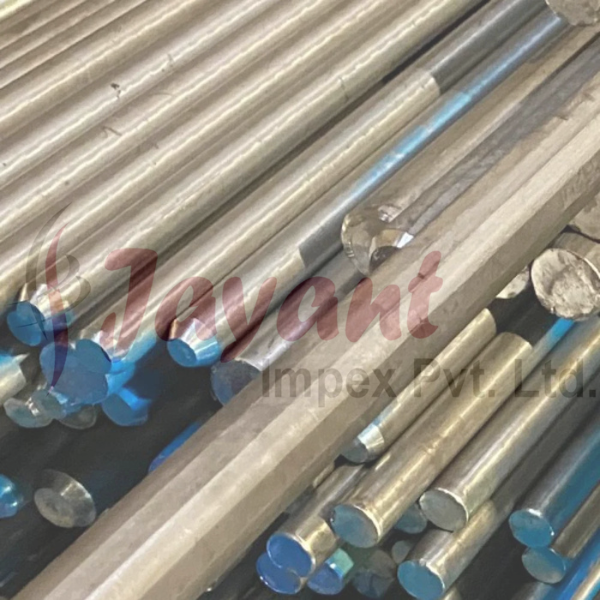
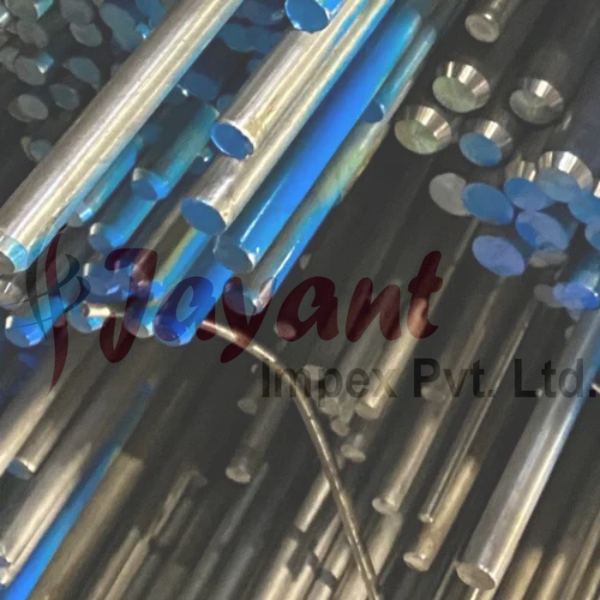
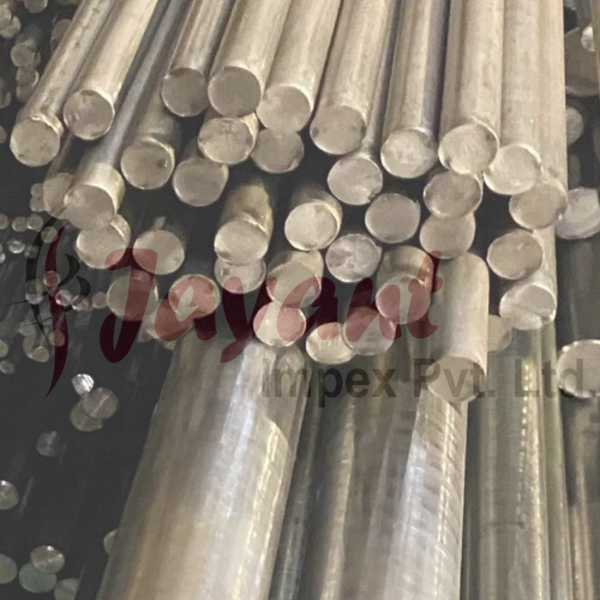
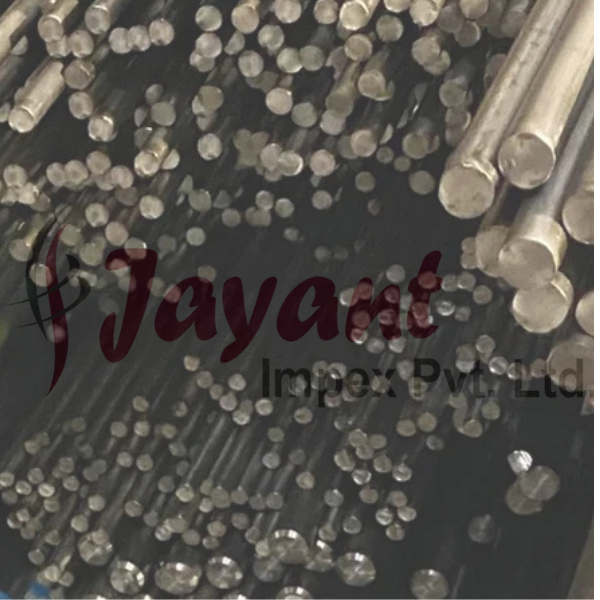
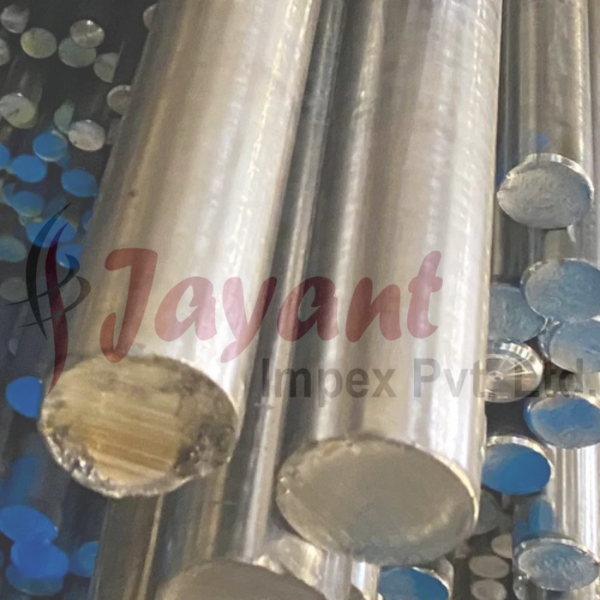
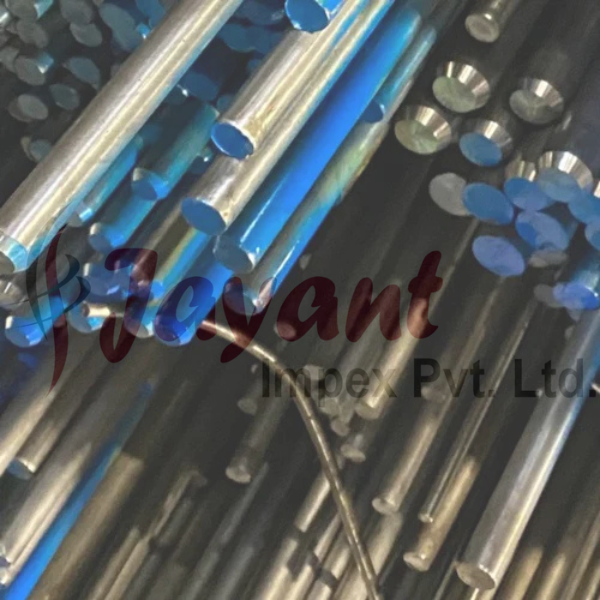
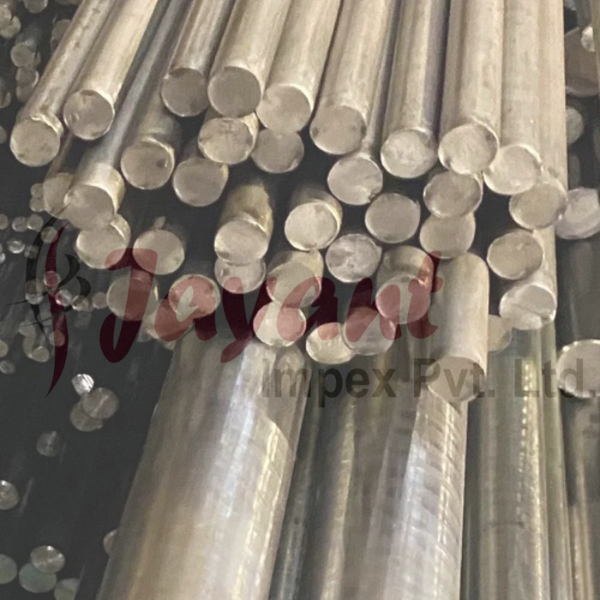
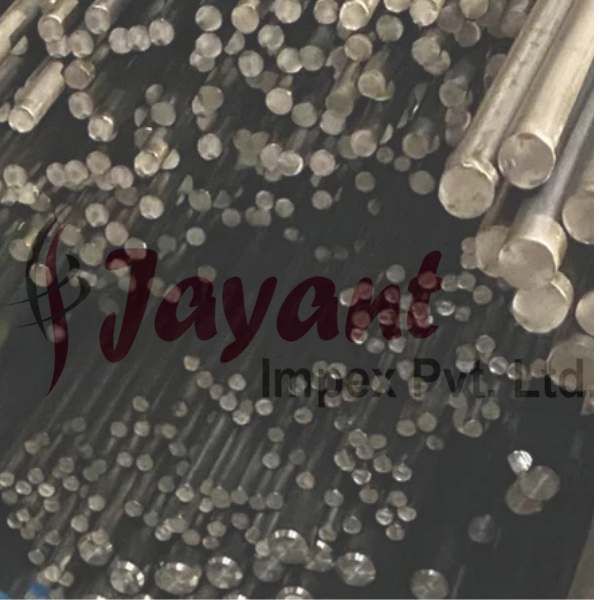
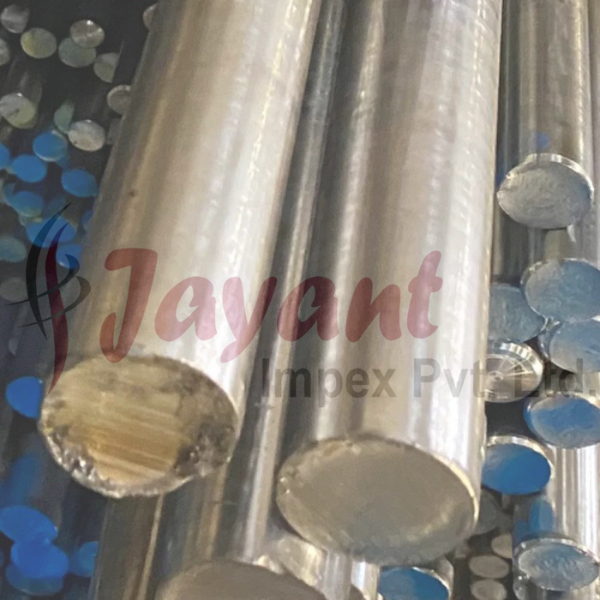
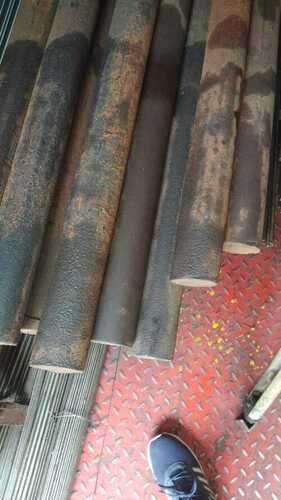
P20 Tool Steel Bars (Mold or Mould Steel AISI P20, SAE P20)
120.0 INR/Ton
Product Details:
- Length As per requirement (commonly 3-6 meters)
- Technique Hot Rolled / Forged
- Grade P20
- Application Plastic Injection Moulds, Die Casting Dies, Tools Manufacturing
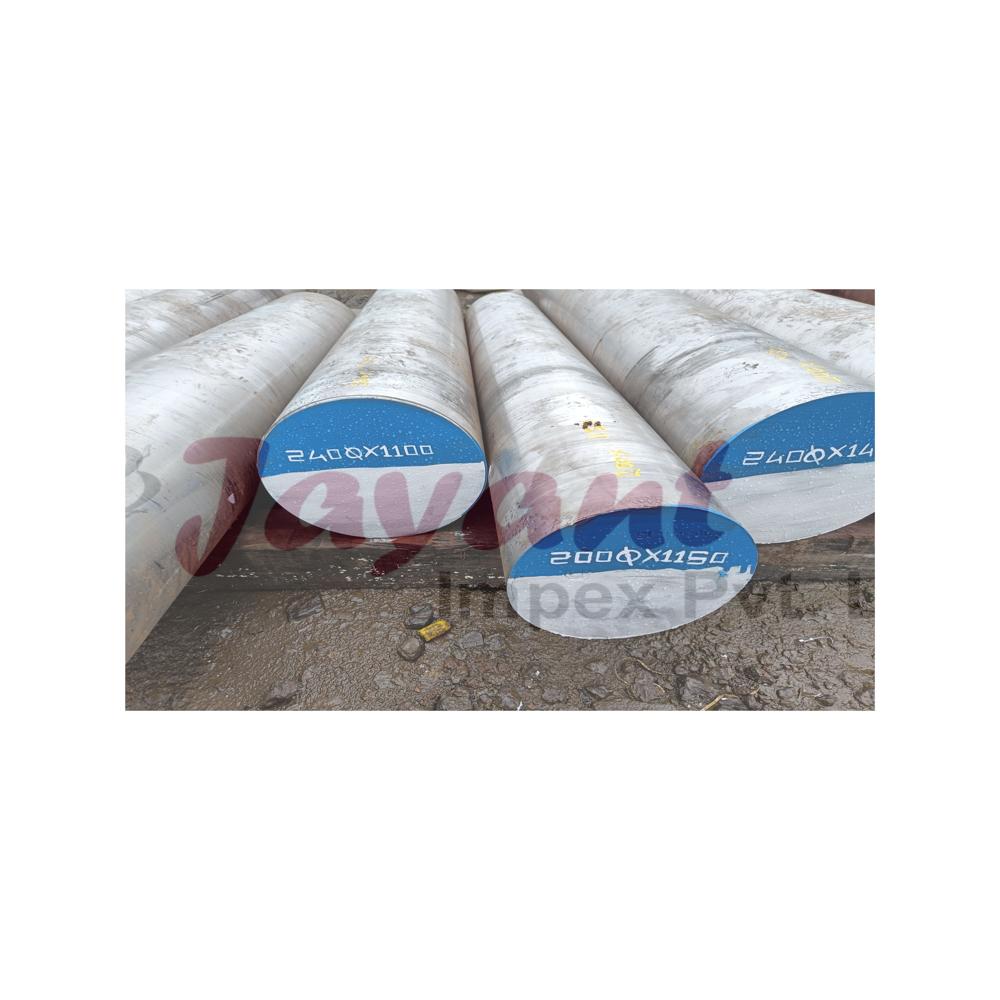
- Diameter 12 mm to 350 mm or custom sizes
- Specific Use Mould Bases, Die Holders, Tooling components
- Type Round Bar
- Click to view more
X
P20 Tool Steel Bars (Mold or Mould Steel AISI P20, SAE P20) Price And Quantity
- 1 Ton
- 120.0 INR/Ton
P20 Tool Steel Bars (Mold or Mould Steel AISI P20, SAE P20) Product Specifications
- P20 Tool Steel
- AISI P20, SAE P20
- Annealed, Pre-hardened
- Machined, Peeled or Bright
- H9, H11 or as per specification
- 12 mm to 350 mm or custom sizes
- Plastic Injection Moulds, Die Casting Dies, Tools Manufacturing
- P20
- Hot Rolled / Forged
- As per requirement (commonly 3-6 meters)
- Mould Bases, Die Holders, Tooling components
- Round Bar
- ~7.85 g/cm3
- Negotiable / As per client requirement
- Good
- C 0.28-0.40%, Si 0.20-0.80%, Mn 0.60-1.00%, Cr 1.40-2.00%, Mo 0.30-0.55%
- Prehardened and tempered
- 280-325 HB (pre-hardened)
- Turned/Bright/Black
- Moderate
- Prehardened, can be nitrided
- Good
Product Description
AISI P20 (UNS T51620), widely referred to as SAE P20 or Plastic Mold/Mould Steel, is a chromium-molybdenum low-alloy tool steel engineered specifically for the construction of plastic injection molds and zinc die-casting dies.
The defining operational advantage of P20 is that it is almost always supplied by stockists in a Pre-Hardened (Quenched and Tempered) condition, typically to a working hardness of 28 to 32 HRC (280 to 320 HBW). This completely eliminates the need for post-machining heat treatment, avoiding the risk of part distortion, cracking, or dimensional scaling in complex, expensive mold cavities.
Chemical Composition (Typical Weight %)
The balance of chromium and molybdenum provides uniform hardness even through thick cross-sections of large mold blocks.
| Carbon (C) | Chromium (Cr) | Molybdenum (Mo) | Manganese (Mn) | Silicon (Si) | Nickel (Ni) |
| 0.28 0.40% | 1.40 2.00% | 0.30 0.55% | 0.60 1.00% | 0.20 0.80% | ~1.00% (Optional variants) |
Critical Variant Profiles: P20 vs. P20+S vs. P20+Ni
When sourcing P20 bars, you will likely encounter three specific commercial variants designed to optimize different manufacturing processes:
-
Standard P20 (W.Nr. 1.2311 / 3Cr2Mo): The base grade providing balanced toughness, machinability, and standard polishability.
-
P20+S (W.Nr. 1.2312 / 40CrMnMoS8-6): Infused with extra sulfur to dramatically boost machinability for automated milling. Note: The sulfur inclusions lower its capability for mirror-polishing or photo-etching.
-
P20+Ni (W.Nr. 1.2738 / 40CrMnNiMo8-6-4): Contains ~1% nickel. This enhances core thorough-hardenability in heavy block cross-sections and enables a high mirror-polish finish, ideal for high-gloss aesthetic consumer plastic molds.
Structural Applications by Form
1. P20 Tool Steel Bars & Rods
Delivered pre-hardened for clean, predictable milling and turning. Round bar and rod stock are highly utilized for:
-
Mould Bases & Bolsters: The structural skeleton plates that back up and support the mold inserts under severe clamping pressures.
-
Die Holders & Backers: Retains structural alignment in zinc die-casting setups.
-
Heavy-Duty Machinery Parts: Shafts, rails, and structural wear strips operating under moderate load where low distortion is a priority.
2. P20 Flat Block Bars & Plates
Milled, sawn, or forged flat blocks are the primary raw material for cavity machining.
-
Plastic Injection Molds: Used to form consumer electronics casings, automotive interior components (dashboards, door panels), household containers, and toys.
-
Blow Molding Dies: Ideal for high-volume container lines where chemical attack from polymers is low.
-
Zinc Die Casting Dies: Can withstand the moderate thermal cyclical stress of molten zinc injection.
Thermal Processing & Maintenance parameters
Because P20 is delivered pre-hardened, traditional hardening is rare. Instead, stress relieving is the primary thermal process.
-
Stress Relieving (Post-Machining): Heavy machining introduces severe structural stress. To ensure long-term dimensional stability, heat to $460^circtext{C} - 500^circtext{C}$, soak thoroughly (1 hour per inch of thickness), and cool slowly in still air or the furnace.
-
Soft Annealing (Only if re-hardening is required): Heat uniformly to $760^circtext{C} - 788^circtext{C}$, hold for 2 hours, and slow-cool in the furnace ($le 4^circtext{C}$ per hour) down to $600^circtext{C}$. This drops the hardness to max 235 HBW.
-
Re-Hardening: Austenitize at $830^circtext{C} - 870^circtext{C}$, followed by an oil quench or a warm salt bath ($180^circtext{C} - 220^circtext{C}$).
-
Tempering (Re-treatment): If re-hardened, temper immediately between $482^circtext{C} - 593^circtext{C}$ to safely return to a stabilized mold-working window of 28 to 37 HRC.
Global Cross-Reference Equivalents
When verifying mill test certificates (MTC) or global cross-references, P20 corresponds directly to:
-
Germany (DIN / W.Nr.): 1.2311 (Standard) / 1.2312 (Resulfurized) / 1.2738 (+Ni)
-
China (GB): 3Cr2Mo / 3Cr2MnNiMo
-
Japan (JIS): ~PX5 / PDS3 (Proprietary mill equivalents matching P20 performance)
-
International (ISO): 40CrMnMo7 / 40CrMnNiMo8-6-4
Reliable Solution for Mould Manufacturing
P20 Tool Steel Bars are widely recognized in the tooling industry for their balance of toughness and machinability. With a consistent supply condition-prehardened and tempered-they minimize time and effort in hardening processes, making them a go-to choice for manufacturing robust plastic injection moulds, die holders, and special tooling components.
Customizable for Diverse Industrial Needs
Available in a variety of diameters (12 mm to 350 mm) and custom lengths, P20 Tool Steel Bars can be tailored to specific project requirements. Whether finishing in turned, bright, or black surface condition, or selecting tolerances like H9 or H11, these steel bars fit a vast spectrum of industrial applications.
FAQ's of P20 Tool Steel Bars (Mold or Mould Steel AISI P20, SAE P20):
Q: What are the typical applications of P20 Tool Steel Bars?
A: P20 Tool Steel Bars are primarily used for plastic injection moulds, die casting dies, mould bases, die holders, and various tooling components due to their reliable mechanical properties and prehardened state.Q: How are P20 Tool Steel Bars supplied and finished?
A: These bars are supplied in prehardened and tempered conditions and can be delivered in turned, bright, or black surface finishes as per client specifications.Q: Can P20 Tool Steel Bars be further hardened after delivery?
A: While they are supplied prehardened (280-325 HB), P20 bars can be further surface hardened through processes like nitriding if enhanced wear resistance is needed.Q: What makes P20 Tool Steel Bars suitable for plastic mould applications?
A: Their good machinability, moderate corrosion resistance, and consistent through-hardness provide the durability and precision necessary for complex mould and die projects.Q: What are the available diameters and lengths for P20 Tool Steel Bars?
A: Diameters range from 12 mm up to 350 mm, with custom lengths available-most commonly supplied between 3 and 6 meters as per client requirements.Q: Are P20 Tool Steel Bars easy to weld and machine during fabrication?
A: Yes, P20 Tool Steel features good weldability and machinability, allowing for efficient fabrication, repair, and modification of mould and die assemblies.Tell us about your requirement

Price:
Quantity
Select Unit
- 50
- 100
- 200
- 250
- 500
- 1000+
Additional detail
Mobile number
Email

Other Products in 'Steel Bar' category

JAYANT IMPEX
GST : 27AAQFJ5764L1ZJ
GST : 27AAQFJ5764L1ZJ

- 6th, 605, Majestic Shopping Center, Jagannath Shankarseth Road, Girgaon,Mumbai - 400004, Maharashtra, India
- Phone : 08045800544

- Mr Shrenik Prakash Mehta (Director)
- Mobile : 08045800544
-
jayantimpex12@gmail.com


-
Share to



 Send Inquiry
 Send SMS
 Call Me Free
JAYANT IMPEX PVT. LTD. All Rights Reserved.(Terms of Use)
Developed and Managed by Infocom Network Private Limited. Terms of use | Returns Policy Member
Developed and Managed by Infocom Network Private Limited. Terms of use | Returns Policy Member
