 English
 Spanish
 French
 German
 Italian
 Chinese (Simplified)
 Japanese
 Korean
 Arabic
 Portuguese
 Call Us : 08045800544
 Call Us : 08045800544
 Get a Quote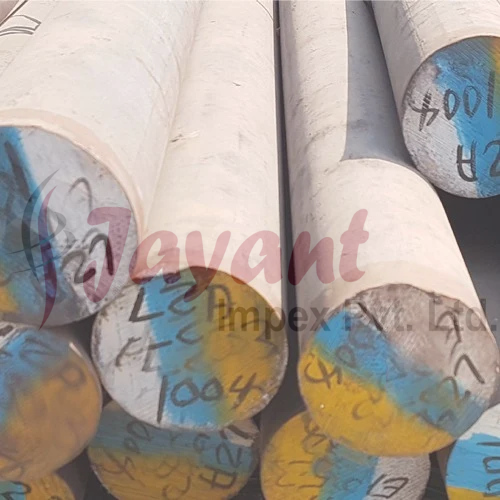
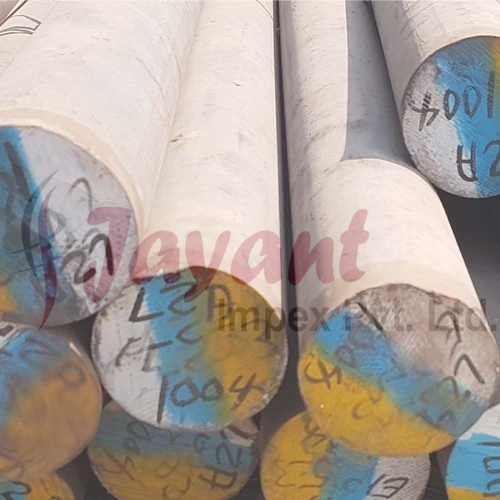
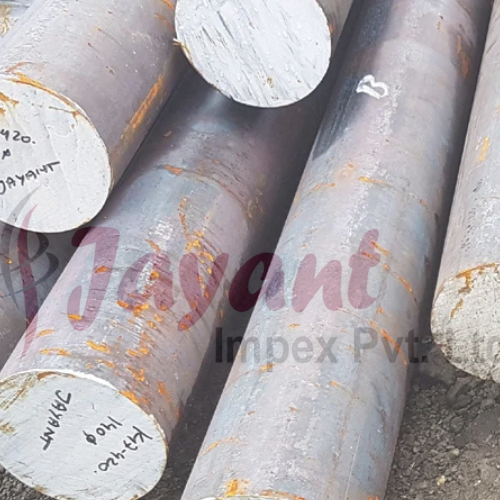
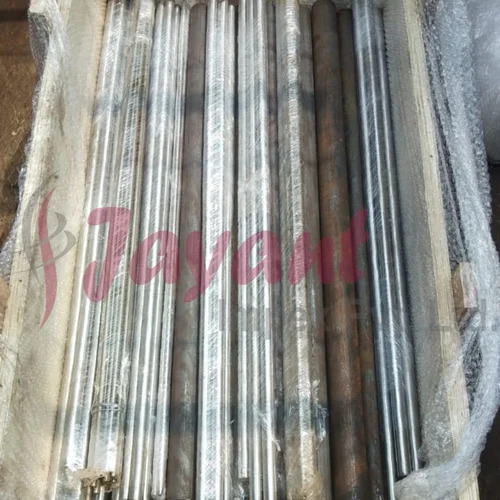
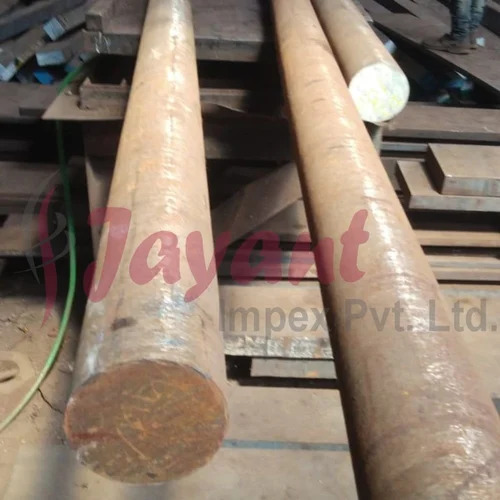
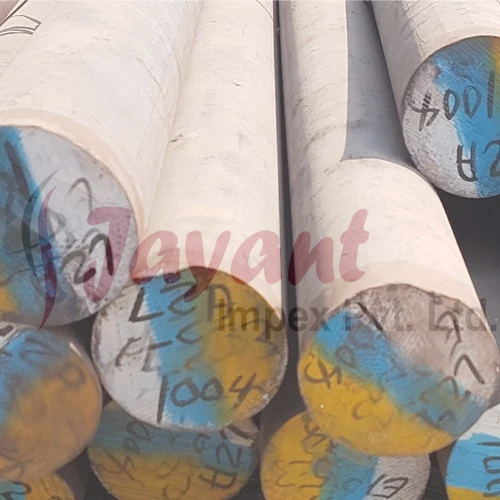
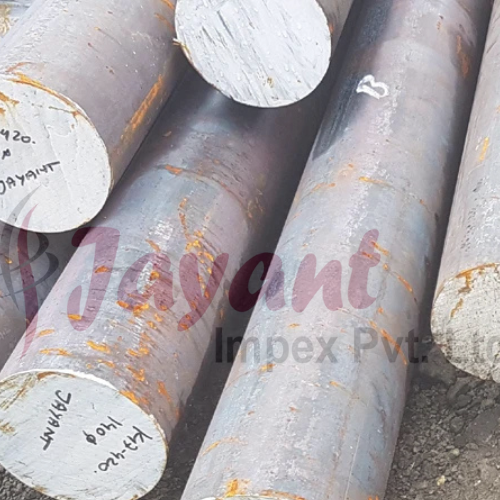
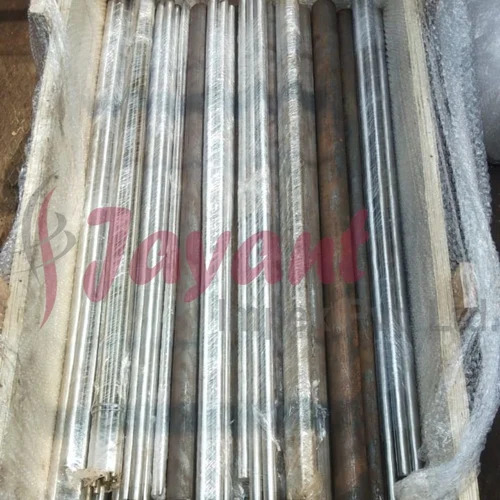
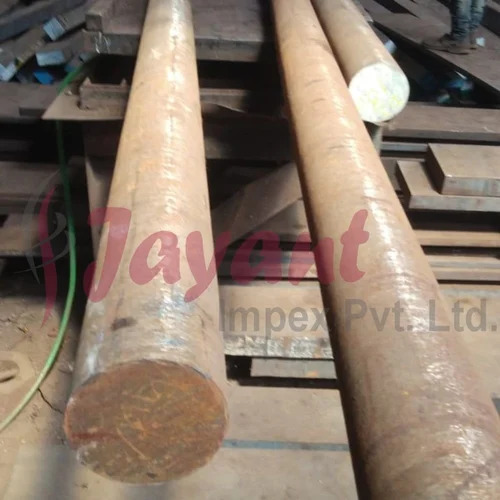
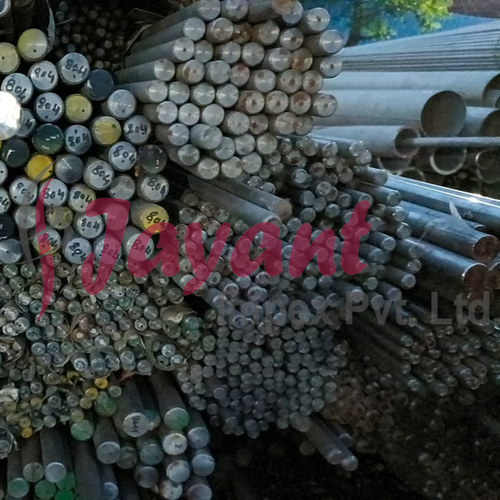
Chrome Moly DIN 1.7225 Alloy Steel Bars
130.0 INR/Kilograms
Product Details:
- Specific Use Shafts, Gears, Axles, Bolts, Fasteners, High-stress Parts
- Tolerance H9, H11, K12 or as specified
- Processing Quenched and Tempered / Heat Treated
- Finish Peeled, Turned, Rough Machined, Polished
- Grade 1.7225 / 42CrMo4 / 4140
- Technique Hot Rolled / Forged
- Application Automotive, Engineering, Oil & Gas, Structural, Mechanical Components
- Click to view more
X
Chrome Moly DIN 1.7225 Alloy Steel Bars Price And Quantity
- 130.0 INR/Kilograms
- 1 Kilograms
Chrome Moly DIN 1.7225 Alloy Steel Bars Product Specifications
- 1.7225 / 42CrMo4 / 4140
- Hot Rolled / Forged
- Peeled, Turned, Rough Machined, Polished
- Shafts, Gears, Axles, Bolts, Fasteners, High-stress Parts
- H9, H11, K12 or as specified
- Quenched and Tempered / Heat Treated
- Round Bars
- 16mm to 350mm or as required
- 2 meters to 6 meters (custom lengths available)
- DIN 1.7225 / AISI 4140 / EN19
- Automotive, Engineering, Oil & Gas, Structural, Mechanical Components
- Chrome Moly DIN 1.7225 Alloy Steel
- Annealed / Quenched & Tempered / Normalized
- Good (in normalized or tempered condition)
- 835 MPa minimum (after heat treatment)
- 28-32 HRC (after heat treatment)
- 210 GPa
- 1000 MPa minimum (after heat treatment)
- 7.85 g/cm3
- >47 J @ -20C (Charpy V Notch)
- Moderate, not suitable for highly corrosive environments without coating
- 13% minimum
- Smooth, Defect-Free, Descaled
Product Description
W.Nr. 1.7225 (standardized as 42CrMo4 under EN 10083-3) is arguably the most widely used Chromium-Molybdenum alloy structural steel in European engineering. When specified in bar stockwhether hot-rolled, forged, or bright-drawnit serves as the absolute benchmark for high fatigue strength, toughness, and torsional wear resistance.
It is the direct European equivalent to the ubiquitous AISI 4140, but with slightly tighter parameter windows for manganese, sulfur, and phosphorus to ensure higher material cleanliness and more predictable heat treatment response.
1. Chemical Formula (EN 10083-3 / DIN 1.7225)
The balance of chromium and molybdenum gives 1.7225 bars its characteristic hardenability and thermal stability:
| Element | Composition (%) | Primary Engineering Role |
| Carbon (C) | $0.38% - 0.45%$ | Dictates baseline tensile strength and core hardenability. |
| Chromium (Cr) | $0.90% - 1.20%$ | Increases surface hardness depth, oil-quenching depth, and abrasive wear resistance. |
| Molybdenum (Mo) | $0.15% - 0.30%$ | Suppresses temper brittleness and maintains creep resistance up to $sim 500^circtext{C}$. |
| Manganese (Mn) | $0.60% - 0.90%$ | Promotes deep through-hardening during quenching and acts as a deoxidizer. |
| Silicon (Si) | $le 0.40%$ | Enhances the elasticity and overall yield point of the steel. |
| Sulfur (S) | $le 0.035%$ | Kept low to minimize non-metallic stringer inclusions. |
2. The Dimension vs. Strength Rule (+QT Condition)
When purchasing 1.7225 bars in the standard Quenched & Tempered (+QT) condition, it is critical to realize that its mechanical performance transitions depending on the cross-sectional size ($d$). Because it doesn't contain nickel (unlike 1.6565), its through-hardening depth shows a distinct profile across larger bars:
| Bar Diameter (d) | Yield Strength (Re, min) | Tensile Strength (Rm) | Impact Toughness (KV, min) |
| $le$ 16 mm | 900 MPa | 1100 1300 MPa | 30 Joules |
| 16 mm 40 mm | 750 MPa | 1000 1200 MPa | 35 Joules |
| 40 mm 100 mm | 650 MPa | 900 1100 MPa | 35 Joules |
| 100 mm 160 mm | 550 MPa | 800 950 MPa | 35 Joules |
| 160 mm 250 mm | 500 MPa | 750 900 MPa | 35 Joules |
3. Alternative Supply States
Depending on the machining plan, 1.7225 bars are distributed in several key structural delivery conditions:
-
Soft Annealed (+A): Heat treated to drop hardness below 241 HBW. This is the standard state if you are doing extensive material removal (long drill passes, complex spline hobbing, deep milling) to save tooling cost.
-
Treated to Improve Shearability (+S): Softened slightly up to a max of 255 HBW to allow industrial cold-shearing or cold-heading without causing structural cracks.
-
Pre-Hardened (+QT): Pre-treated to approximately 28 to 34 HRC. It allows component creation via direct machining, bypassing final quenching lines and avoiding dimensional warping.
4. Technical Processing Realities
-
Surface Modification: 1.7225 responds beautifully to surface treatment. While its core remains tough at $sim30text{ HRC}$, its skin can be induction-hardened or nitrided up to 5055 HRC to act as a high-wear bearing surface for pins, journals, or gear teeth.
-
Welding Limitations: Due to high crack sensitivity under quick thermal cooling, 1.7225 is classified as poorly weldable. For repair or assembly work, you must preheat the block to $200^circtext{C} - 300^circtext{C}$ and perform immediate Post-Weld Heat Treatment (PWHT) to temper the newly formed brittle martensite zone.
5. International Equivalents
When reviewing or replacing 1.7225 stock from varying regional sources:
-
USA: AISI 4140 / SAE 4140
-
Japan: JIS SCM440 / SCM440H
-
France (AFNOR): 42CD4
-
United Kingdom: BS 708M40 (Classic EN19)
-
China: GB 42CrMo / 42CrMoA
-
Russia: GOST 38KhM (38) or 42KhM (42)
High-Performance Mechanical Properties
These alloy steel bars are engineered for demanding applications, boasting exceptional yield and tensile strengths after heat treatment. The 28-32 HRC hardness, along with an impact value exceeding 47 J at -20C, ensures durability even in tough conditions. Their reliable strength and ductility make them ideal for parts subjected to significant mechanical stress such as shafts and gears.
Versatile Industrial Applications
Chrome Moly DIN 1.7225 Alloy Steel Bars are widely utilized in automotive, engineering, oil & gas, and structural sectors. Their ability to withstand intense loads without deforming enhances component longevity. The bars' versatile processing and finishing options further expand their suitability for axles, fasteners, bolts, and mechanical assemblies.
Processing and Delivery Flexibility
Available in hot rolled or forged conditions, these bars can be delivered annealed, normalized, or quenched & tempered, based on application requirements. Customers can choose between various finishes, such as peeled, turned, or rough machined, as well as custom lengths. This flexibility ensures a solution tailored to precise technical demands.
FAQ's of Chrome Moly DIN 1.7225 Alloy Steel Bars:
Q: How are Chrome Moly DIN 1.7225 Alloy Steel Bars processed for optimal strength?
A: These bars undergo heat treatments such as quenching and tempering, or normalization, to achieve a hardness of 28-32 HRC and enhance mechanical properties like yield strength (minimum 835 MPa) and tensile strength (minimum 1000 MPa). The process refines the grain structure, improving impact resistance and overall durability.Q: What industries commonly use this alloy steel, and for what applications?
A: Industries such as automotive, engineering, oil & gas, and structural fabrication rely on these alloy steel bars for high-stress components, including shafts, axles, gears, fasteners, and bolts, due to their excellent strength and impact resistance.Q: When should I choose this alloy steel over other materials?
A: Choose Chrome Moly DIN 1.7225 Alloy Steel when your application demands high mechanical strength, moderate corrosion resistance, and good machinability-particularly for components subjected to elevated stress or requiring reliability in challenging environments.Q: Where are these bars supplied from, and can I get custom sizes?
A: These alloy steel bars are supplied by manufacturers, exporters, and dealers throughout India. They are available in standard lengths from 2 to 6 meters and diameters from 16mm to 350mm, with the option for custom sizes upon request.Q: What is the typical process for ordering custom-length or finish bars?
A: You can specify your requirements-such as length, diameter, finish, and tolerance-to the supplier or manufacturer. After reviewing the technical needs, the bars are produced accordingly and delivered in the specified condition (annealed, normalized, or quenched & tempered).Q: How does the corrosion resistance of DIN 1.7225 bars compare to other steels?
A: While they offer moderate corrosion resistance suitable for many industrial environments, they are not recommended for highly corrosive conditions unless a suitable protective coating is applied. For highly corrosive situations, consider stainless steel alloys instead.Q: What benefits do these bars offer for mechanical component fabrication?
A: They provide a combination of high tensile and yield strength, good ductility, and excellent machinability, resulting in reliable performance and extended service life for mechanical parts under heavy load and impact conditions.Tell us about your requirement

Price:
Quantity
Select Unit
- 50
- 100
- 200
- 250
- 500
- 1000+
Additional detail
Mobile number
Email

Other Products in 'Steel Bar' category

JAYANT IMPEX
GST : 27AAQFJ5764L1ZJ
GST : 27AAQFJ5764L1ZJ

- 6th, 605, Majestic Shopping Center, Jagannath Shankarseth Road, Girgaon,Mumbai - 400004, Maharashtra, India
- Phone : 08045800544

- Mr Shrenik Prakash Mehta (Director)
- Mobile : 08045800544
-
jayantimpex12@gmail.com


-
Share to



 Send Inquiry
 Send SMS
 Call Me Free
JAYANT IMPEX PVT. LTD. All Rights Reserved.(Terms of Use)
Developed and Managed by Infocom Network Private Limited. Terms of use | Returns Policy Member
Developed and Managed by Infocom Network Private Limited. Terms of use | Returns Policy Member
