 English
 Spanish
 French
 German
 Italian
 Chinese (Simplified)
 Japanese
 Korean
 Arabic
 Portuguese
 Call Us : 08045800544
 Call Us : 08045800544
 Get a Quote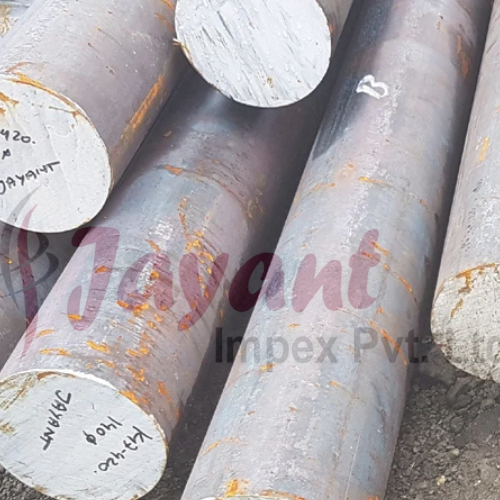
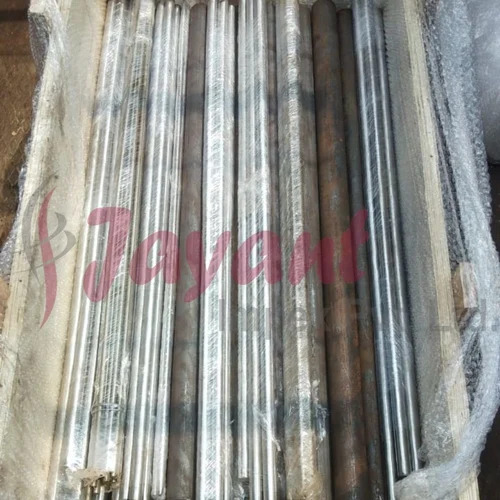
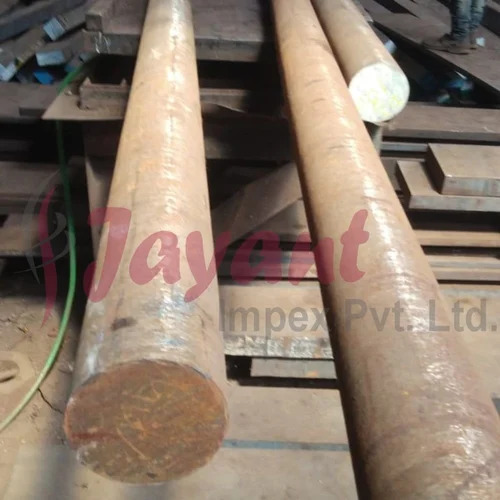
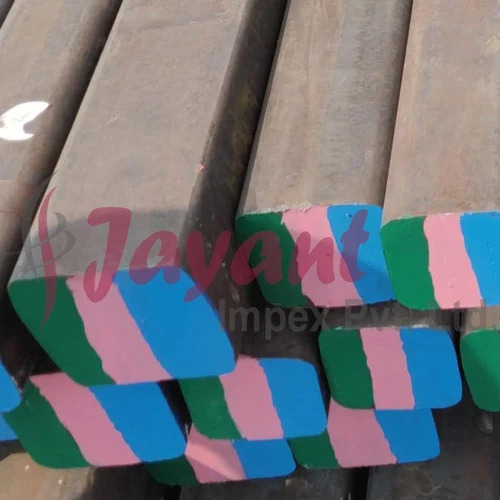
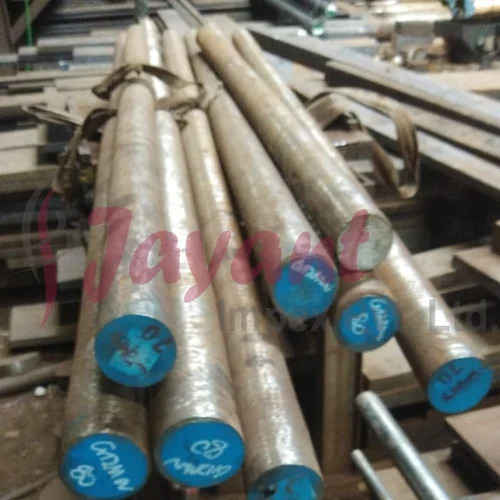
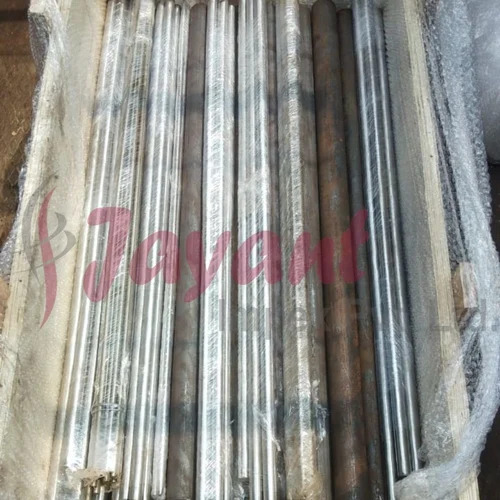
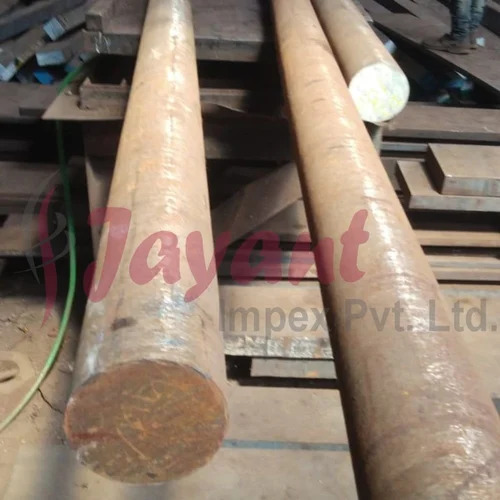
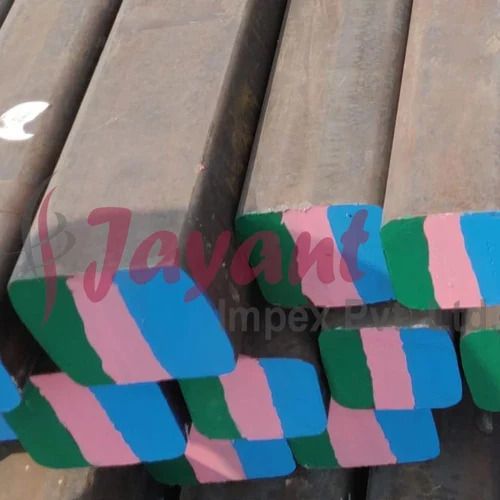
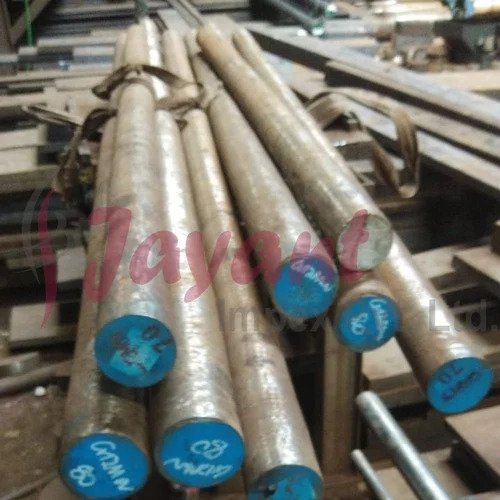
Russia GOST 20KHM Alloy Steel 30KHMA Chrome Moly Bars
69.0 INR/Kilograms
Product Details:
- Technique Hot Rolled, Forged
- Specific Use High Strength and Wear Resistant Applications
- Finish Rough Turned, Black, Peeled, Polished
- Length Random, Cut-to-Length (as per requirement)
- Material Alloy Steel
- Application Construction, Engineering, Mechanical Components, Shafts, Gears, Automotive, Aerospace, Heavy Machinery
- Diameter 20mm - 500mm (custom sizes available)
- Click to view more
X
Russia GOST 20KHM Alloy Steel 30KHMA Chrome Moly Bars Price And Quantity
- 1 Kilograms
- 69.0 INR/Kilograms
Russia GOST 20KHM Alloy Steel 30KHMA Chrome Moly Bars Product Specifications
- 20mm - 500mm (custom sizes available)
- GOST 4543-71, 20KHM, 30KHMA
- 20KHM, 30KHMA
- High Strength and Wear Resistant Applications
- +/-0.5mm to +/-1mm (or as specified)
- Hot Rolled, Forged
- Random, Cut-to-Length (as per requirement)
- Chrome Moly Bar
- Alloy Steel
- Construction, Engineering, Mechanical Components, Shafts, Gears, Automotive, Aerospace, Heavy Machinery
- Precision Machining, Heat Treatment, Annealed, Normalized, Hardened and Tempered
- Rough Turned, Black, Peeled, Polished
- Min. 835 MPa (quenched and tempered)
- Annealing, Normalizing, Quenching, Tempering
- Mill Finish, Rough, or Machined
- Round Bars
- Good, with proper surface treatment
- 170-229 HB (annealed); Up to 321 HB (quenched and tempered)
- High, suitable for low-temperature applications
- Metallic Grey (with oxide film from hot rolling)
- Min. 980 MPa (quenched and tempered)
- Min. 10% (depending on heat treatment)
Product Description
Under the Russian GOST 4543 standard, 20KHM (20) and 30KHMA (30) are prominent chromium-molybdenum (Chrome Moly) alloy structural steels. In bar form, they are specified for applications demanding a reliable blend of tensile strength, fatigue resistance, and thermal stability.
The naming convention gives away their composition: 20/30 denotes the carbon content in hundredths of a percent, KH () represents Chromium, M () stands for Molybdenum, and the A () at the end of 30KHMA signifies a high-quality grade with stricter control over impurities like phosphorus and sulfur.
1. Chemical Composition Comparison
While both steels rely on the synergy of Chromium and Molybdenum to achieve depth-of-hardening and resist thermal degradation, they target different carbon ranges:
| Element | GOST 20KHM (20) | GOST 30KHMA (30) | Primary Role |
| Carbon (C) | $0.22% - 0.29%$ | $0.26% - 0.33%$ | Controls core hardness and strength. |
| Chromium (Cr) | $0.90% - 1.20%$ | $0.80% - 1.10%$ | Enhances hardenability and wear resistance. |
| Molybdenum (Mo) | $0.15% - 0.30%$ | $0.15% - 0.25%$ | Eliminates temper brittleness; raises creep strength. |
| Manganese (Mn) | $0.60% - 0.90%$ | $0.40% - 0.70%$ | Deoxidizes and aids deep through-hardening. |
| Silicon (Si) | $le 0.40%$ | $0.17% - 0.37%$ | Boosts overall elastic limits. |
| Phosphorus / Sulfur | $le 0.025% / le 0.035%$ | $le 0.025% / le 0.025%$ | (Stricter limits in "A" quality to minimize defects). |
2. Choosing Between 20KHM and 30KHMA
The structural behavior of these two bar stocks differs primarily due to the carbon shift:
GOST 20KHM: The Tough, Weldable Workhorse
Because of its lower carbon content, 20KHM yields lower baseline hardness but offers excellent impact toughness and superior weldability compared to 30KHMA.
-
Key Use Case: It handles dynamic, high-impact, and vibrational loads beautifully. It is heavily favored in high-pressure piping components, flanges, and structural boiler parts operating at elevated temperatures (up to 450C500C).
GOST 30KHMA: The High-Tensile, Relaxation-Resistant Upgrade
With more carbon and an elite "A" refinement classification, 30KHMA can be heat-treated to significantly higher tensile strengths and yield points. It is officially classified as a relaxation-resistant steel.
-
Key Use Case: It excels under continuous high-stress loads without stretching or deforming over time. This makes it the standard choice for massive industrial fasteners, turbine rotors, heavy-duty studs, gears, and shafts working in extreme power transmission profiles.
3. Mechanical Properties (Typical Quenched & Tempered State)
When these bars are supplied or heat-treated via Oil Quenching ($sim$880C) and High-Temperature Tempering ($sim$540C650C), they achieve highly robust structural properties:
-
Tensile Strength ($R_m$):
-
20KHM: $sim$ 650 850 MPa (highly dependent on cross-section diameter)
-
30KHMA: $ge$ 930 MPa (often reaching 1000+ MPa in smaller bar profiles)
-
-
Yield Strength ($R_e$):
-
20KHM: $ge$ 450 500 MPa
-
30KHMA: $ge$ 735 MPa
-
-
Brinell Hardness (HBW):
-
Annealed State (+A): Both grades sit comfortably $le$ 212229 HB, rendering them highly machinable for complex CNC cutting or drilling before final heat treatment.
-
Fully Hardened State: 30KHMA can achieve surface hardpoints well suited for friction interfaces.
-
4. Global Material Equivalents
If you are replacing GOST-specified bars with Western or Asian standards, these grades serve as the closest equivalents:
| GOST Grade | US (AISI/SAE) | European (EN / DIN) | Japan (JIS) | China (GB) |
| 20KHM | AISI 4120 / 4125 | 22CrMo4 / 25CrMo4 ($1.7218$) | SCM 420 / 425 | 20CrMo |
| 30KHMA | AISI 4130 / 4135 | 30CrMo4 / 34CrMo4 ($1.7220$) | SCM 430 / 432 | 30CrMo / 30CrMoA |
5. Machining & Welding Realities
Fabrication Warning
Welding: 20KHM can be welded with proper preheating ($sim$150C200C) and low-hydrogen electrodes. 30KHMA is much more difficult to weld due to its higher carbon equivalent. It has "limited weldability" and requires mandatory preheating up to 250C300C followed by immediate post-weld heat treatment (PWHT) to prevent brittle heat-affected zones (HAZ) and hydrogen cold-cracking.
Forging: Both steels should be forged within the $1230^circtext{C}$ to $950^circtext{C}$ window, with a controlled slow cool down to avoid internal thermal cracking.
Exceptional Mechanical Performance
Designed for high-strength and wear-resistant applications, GOST 20KHM and 30KHMA Chrome Moly Steel Bars deliver outstanding mechanical properties, including high yield and tensile strength, and robust impact resistance even at low temperatures. These qualities make them reliable for use in critical components subjected to heavy loads and harsh environments.
Versatile Heat Treatment Options
The alloy steel bars can undergo various heat treatment processes such as annealing, normalizing, quenching, and tempering. This versatility enables customization of mechanical properties-including hardness and toughness-to specific service requirements, allowing optimal performance across different industries and operational conditions.
Customizable Sizes and Finishes
Bars are produced in diameters ranging from 20mm to 500mm, with options for rough, polished, or machined finishes. Clients can choose random or cut-to-length sections specified to their project's needs. Tolerances are tightly controlled to between +/-0.5mm and +/-1mm, ensuring precise dimensions for fabrication and assembly.
FAQ's of Russia GOST 20KHM Alloy Steel 30KHMA Chrome Moly Bars:
Q: How are GOST 20KHM and 30KHMA Chrome Moly Bars processed for different applications?
A: These alloy steel bars can be hot rolled or forged, and subsequently processed through annealing, normalizing, quenching, or tempering. The specific treatment is selected based on application requirements to achieve desired mechanical properties such as hardness, strength, and ductility.Q: What makes these Chrome Moly bars suitable for heavy-duty and wear-resistant applications?
A: With high hardness (up to 321 HB), superior yield and tensile strength, and excellent impact resistance-even at low temperatures-these bars perform reliably in heavy-duty environments. Their alloy composition and heat treatment flexibility allow tailored performance for gears, shafts, and critical mechanical parts.Q: When should I choose a polished or machined finish over a rough or mill finish?
A: Polished or machined finishes are ideal when surface precision, aesthetics, or reduced friction is required, such as in visible or moving mechanical parts. Rough or mill finishes are suitable for general structural use or when further machining will be done during fabrication.Q: Where are these alloy steel bars typically used?
A: Russia GOST 20KHM and 30KHMA Chrome Moly Bars are used in construction, engineering, automotive, aerospace, and heavy machinery sectors. They are commonly employed in manufacturing shafts, gears, mechanical components, and other high-strength parts.Q: What is the process for ensuring corrosion resistance in these steel bars?
A: Although the bars offer good inherent corrosion resistance, especially with the formation of an oxide film during hot rolling, additional surface treatments-such as painting, coating, or plating-are recommended for use in corrosive environments to maximize longevity.Q: How can the bars be customized to fit specific requirements?
A: Clients can specify the desired diameter (20mm to 500mm), length (random or cut-to-length), tolerance, and surface finish. As a dealer, fabricator, or supplier, we accommodate custom machining or precision processing as required for specialized applications.Tell us about your requirement

Price:
Quantity
Select Unit
- 50
- 100
- 200
- 250
- 500
- 1000+
Additional detail
Mobile number
Email

Other Products in 'Steel Bar' category


JAYANT IMPEX
GST : 27AAQFJ5764L1ZJ
GST : 27AAQFJ5764L1ZJ

- 6th, 605, Majestic Shopping Center, Jagannath Shankarseth Road, Girgaon,Mumbai - 400004, Maharashtra, India
- Phone : 08045800544

- Mr Shrenik Prakash Mehta (Director)
- Mobile : 08045800544
-
jayantimpex12@gmail.com


-
Share to



 Send Inquiry
 Send SMS
 Call Me Free
JAYANT IMPEX PVT. LTD. All Rights Reserved.(Terms of Use)
Developed and Managed by Infocom Network Private Limited. Terms of use | Returns Policy Member
Developed and Managed by Infocom Network Private Limited. Terms of use | Returns Policy Member
