 English
 Spanish
 French
 German
 Italian
 Chinese (Simplified)
 Japanese
 Korean
 Arabic
 Portuguese
 Call Us : 08045800544
 Call Us : 08045800544
 Get a Quote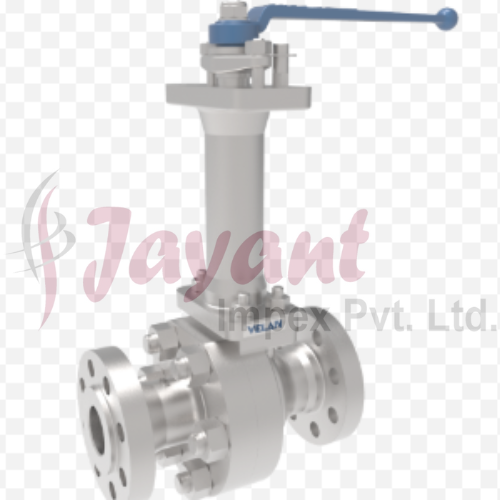
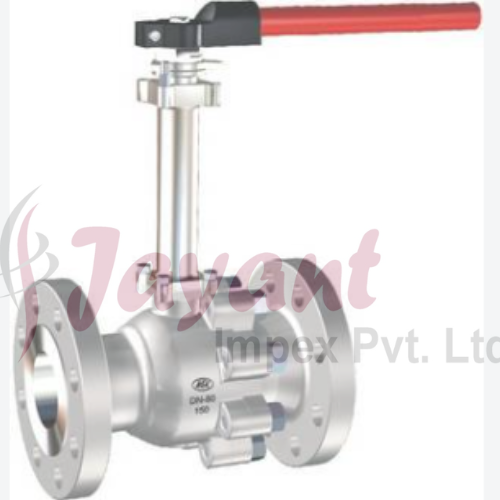
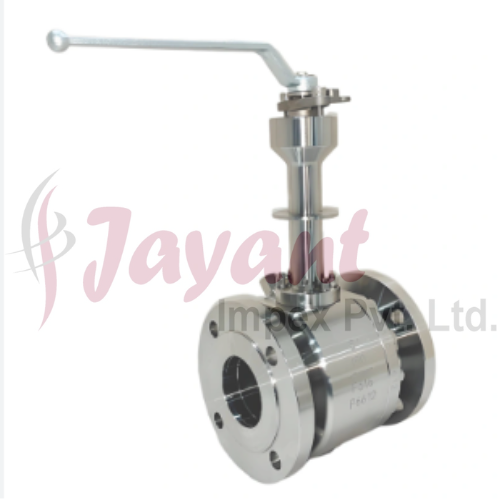
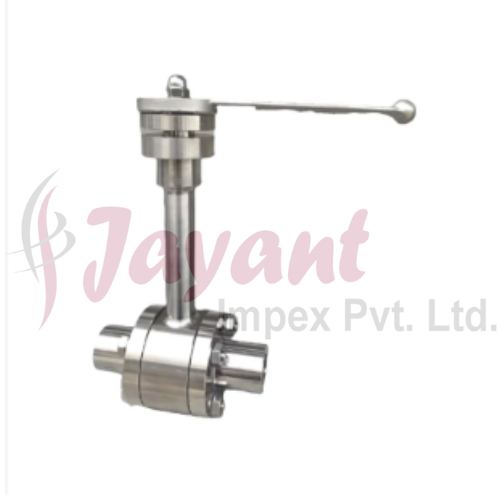
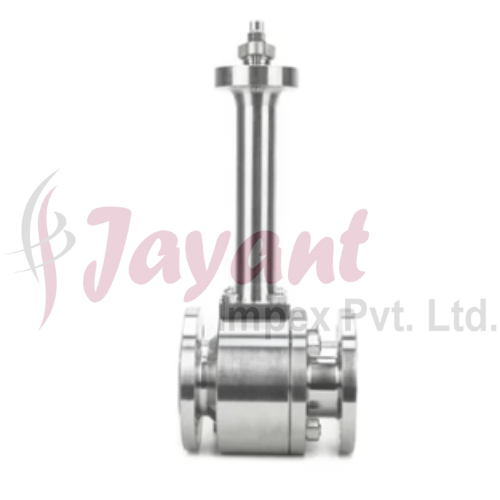

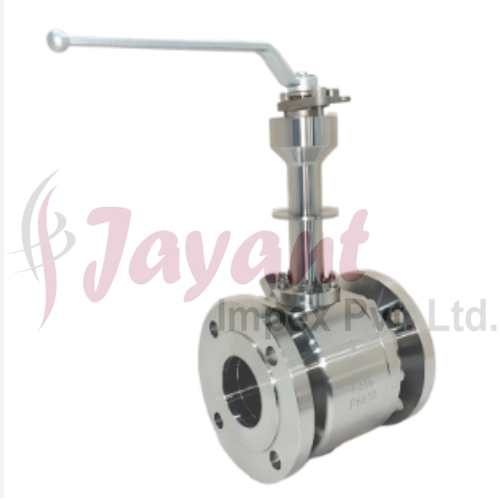
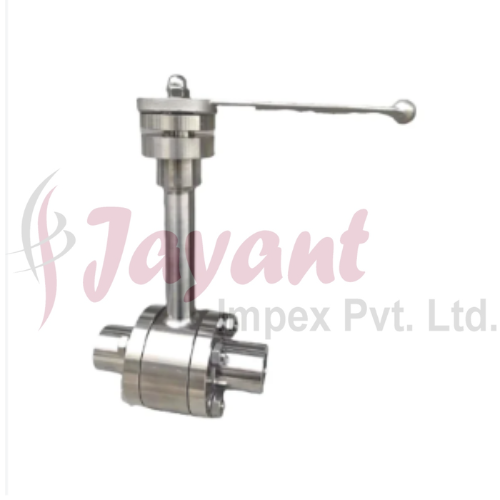
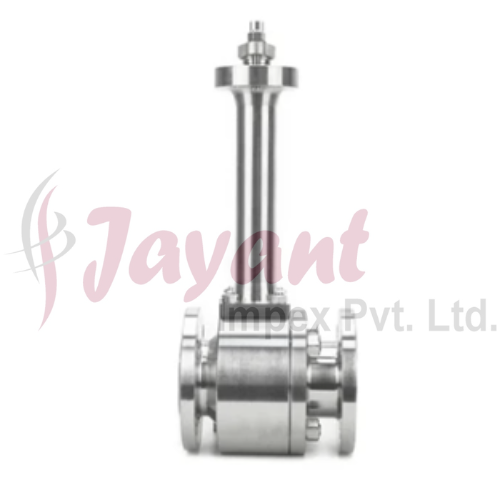
Cryogenic Ball Valve / Forged Steel Cryogenic Ball Valve
3000.0 INR/Piece
Product Details:
- Features Extended stem/bonnet for insulation, anti-static device, fire-safe design, low emission packing
- Valve Type Forged Steel Cryogenic Ball Valve
- Valve Size 12 to 12 (DN15-DN300)
- Material Forged Carbon Steel (A105), Stainless Steel (ASTM A182 F304/F316), LF2, or as required
- Connection Type Flanged (RF/RTJ), Butt Weld, Socket Weld, or Screwed ends
- Control System Manual lever, gearbox, pneumatic/electric actuator compatible
- Structure Forged steel body, floating or trunnion mounted ball
- Click to view more
X
Cryogenic Ball Valve / Forged Steel Cryogenic Ball Valve Price And Quantity
- 3000.0 INR/Piece
- 1 Piece
Cryogenic Ball Valve / Forged Steel Cryogenic Ball Valve Product Specifications
- PTFE, TFM, or soft seat with extended bonnet for thermal insulation
- Forged steel ball
- Ball Valve, Cryogenic type
- Full port or reduced port, as per specification
- Liquefied gases, cryogenic fluids, low temperature media
- Manual lever, gearbox, pneumatic/electric actuator compatible
- Manual, Pneumatic, or Electric actuator
- Cryogenic service, LNG, LPG, liquid nitrogen, and other low-temperature applications
- Forged Carbon Steel (A105), Stainless Steel (ASTM A182 F304/F316), LF2, or as required
- 12 to 12 (DN15-DN300)
- Flanged (RF/RTJ), Butt Weld, Socket Weld, or Screwed ends
- Forged steel body, floating or trunnion mounted ball
- Not applicable for manual, ratings available for actuated types
- Forged Steel Cryogenic Ball Valve
- Blow-out proof stem design
- Class 150 to Class 800 (PN16-PN100)
- Extended stem/bonnet for insulation, anti-static device, fire-safe design, low emission packing
- -196C to +80C
- ASME B16.5 (flanged), ASME B16.11 (screwed/socket weld)
- API 607 or BS 6755 compliant
- ASME B16.10
- Standard 100 mm or as specified
- ISO 5211 actuator mounting flange
- API 598, Class VI
- Down to -196C
- API 608, BS 6364, ASME B16.34, ISO 17292
- Provided as standard
Product Description
When operating at temperatures as low as $-196^circtext{C}$ ($-320^circtext{F}$)typical for Liquefied Natural Gas (LNG), liquid nitrogen, and liquid oxygenstandard industrial valves will fail. The extreme cold causes materials to contract drastically, renders standard elastomers brittle, and risks dangerous pressure build-ups.
Forged steel cryogenic ball valves are engineered specifically to overcome these thermal stresses. By utilizing forged bodies rather than castings, they ensure a dense, defect-free grain structure capable of handling severe thermal shock without cracking.
The Critical Anatomy of a Cryogenic Valve
To survive deep-freeze service, a trunnion or floating ball valve requires several distinct modifications:
[ Actuator / Handwheel ] Extended Stem (Keeps actuator warm) Gas Column Insulates Packings Bonnet / Gland Live-Loaded Packing (Prevents Leaks) Valve Body Forged Austenitic Stainless Steel ( Ball ) Vent Hole on Upstream Side 1. The Extended Bonnet (Gas Column)
The most defining feature of a cryogenic valve is its elongated neck.
-
The Physics: The liquefied gas enters the lower part of the extension and vaporizes. This trapped vapor forms a natural insulating gas column.
-
The Purpose: It keeps the stem packing and actuator warm enough to operate near ambient temperatures, preventing the stem seals from freezing, becoming brittle, and leaking.
-
The Standard: Extension lengths typically conform to standards like BS 6364, which specifies the exact length required based on the operating temperature.
2. Cavity Pressure Relief (The Vent Hole)
In cryogenic service, liquid trapping in the valve cavity is a severe safety hazard. If the valve is closed and the trapped liquid warms up even slightly, it flashes into gas. For LNG, the expansion ratio is roughly 600:1, which can easily cause a catastrophic body explosion.
-
The Solution: Cryogenic ball valves are strictly unidirectional or feature a modified seat design. A micro-hole is drilled into the upstream side of the ball, or a single-seating design is used, allowing any pressure build-up in the cavity to automatically vent back into the upstream line.
3. Live-Loaded Stem Packing
Because temperature cycling causes continuous expansion and contraction, standard stem packing will loosen and leak. Cryogenic valves utilize Belleville (conical) spring washers on the gland bolts. These springs maintain a constant, live-loaded compressive force on the graphite or PTFE packing, automatically compensating for thermal shrinkage.
Forged Material Selection & Standards
At cryogenic temperatures, carbon steel becomes brittle and loses its impact toughness. Therefore, material selection is restricted to metals that maintain a face-centered cubic (FCC) crystal structure at absolute zero.
Forged Body and Trim Materials
-
ASTM A182 FXM-19 (Nitronic 50): Highly favored for high-strength stems; offers exceptional galling resistance and low-temperature toughness.
-
ASTM A182 F316 / F316L: The industry benchmark for forged cryogenic bodies and balls. The low-carbon version (316L) prevents carbide precipitation during any structural welding.
-
Alloy 718 (Inconel): Used for critical internal springs and highly stressed internal components.
Sealing Components
-
PCTFE (Kel-F): The premier choice for cryogenic soft seats. It retains excellent mechanical properties, dimensional stability, and sealing flexibility down to $-250^circtext{C}$.
-
Lip Seals: Spring-energized Elgiloy or Inconel jacketed seals are used where traditional O-rings would freeze solid.
Key Governing Standards
-
BS 6364: The foundational standard for testing valves in cryogenic service.
-
ISO 28921: Specifies requirements and testing for isolating valves for cryogenic applications.
-
MSS SP-134: Covers valves for cryogenic service, including the requirements for body extensions.
Purpose-Built for Cryogenic Applications
Designed to withstand ultra-low operating temperatures down to -196C, our forged steel cryogenic ball valve is indispensable for handling liquefied gases and low-temperature fluids. The extended stem and bonnet maintain insulation, preventing frost and ensuring dependable performance even at extreme conditions.
Comprehensive Compliance and Safety Features
Manufactured according to leading international standards such as API 608, BS 6364, and ASME B16.34, this valve is fire-safe and fitted with an anti-static device, blow-out proof stem, and low emission packing. It adheres to API 607/BS 6755 fire safety and API 598 leakage class, guaranteeing safety and reliability in critical cryogenic operations.
Versatile Connections and Customizable Control
Choose from multiple end connections-flanged, butt weld, socket weld, or screwed-to match your piping requirements. The valve accommodates manual, pneumatic, or electric actuation, and features an ISO 5211 mounting pad for simple automation upgrades, enabling seamless integration into existing systems.
FAQ's of Cryogenic Ball Valve / Forged Steel Cryogenic Ball Valve:
Q: How does the forged steel cryogenic ball valve maintain reliable operation at extremely low temperatures?
A: The valve features an extended stem and bonnet, ensuring insulation and minimizing heat transfer from the environment to the medium. This design allows consistent operation at temperatures as low as -196C, preventing frost accumulation and maintaining robust performance with liquefied gases and other cryogenic fluids.Q: What industry standards and certifications does this valve comply with?
A: This cryogenic ball valve meets API 608, BS 6364, ASME B16.34, and ISO 17292 design standards, with face-to-face dimensions as per ASME B16.10. It also meets fire safety requirements under API 607 or BS 6755 and leakage classifications per API 598, Class VI.Q: When should I use this type of valve in my system?
A: This valve is recommended for systems transporting cryogenic media such as LNG, LPG, liquid nitrogen, and other low-temperature fluids, particularly in scenarios demanding high safety, fire-safe design, and low emissions, such as storage terminals, processing plants, and transport facilities.Q: Where can the valve be installed, and what end connection options are available?
A: The valve is suitable for installation in various systems, including industrial pipelines and storage tanks. End connections include flanged (ASME B16.5), butt weld, socket weld (ASME B16.11), and screwed, enabling compatibility with diverse piping arrangements.Q: What are the main benefits of using a forged steel cryogenic ball valve?
A: Key benefits include excellent durability, superior sealing at low temperatures, fire-safe and anti-static features for enhanced safety, customizable control options (manual or automated), and compliance with the most stringent industry standards, ensuring long-term performance and reliability.Q: How do I select the appropriate pressure class and port size for my application?
A: Selection depends on your system's flow requirements, pressure ratings (Class 150-Class 800), and installation conditions. Full or reduced port options are available, and your supplier can help you specify the correct configuration based on project requirements and media type.Tell us about your requirement

Price:
Quantity
Select Unit
- 50
- 100
- 200
- 250
- 500
- 1000+
Additional detail
Mobile number
Email

Other Products in 'Valves' category



JAYANT IMPEX
GST : 27AAQFJ5764L1ZJ
GST : 27AAQFJ5764L1ZJ

- 6th, 605, Majestic Shopping Center, Jagannath Shankarseth Road, Girgaon,Mumbai - 400004, Maharashtra, India
- Phone : 08045800544

- Mr Shrenik Prakash Mehta (Director)
- Mobile : 08045800544
-
jayantimpex12@gmail.com


-
Share to



 Send Inquiry
 Send SMS
 Call Me Free
JAYANT IMPEX PVT. LTD. All Rights Reserved.(Terms of Use)
Developed and Managed by Infocom Network Private Limited. Terms of use | Returns Policy Member
Developed and Managed by Infocom Network Private Limited. Terms of use | Returns Policy Member
