 English
 Spanish
 French
 German
 Italian
 Chinese (Simplified)
 Japanese
 Korean
 Arabic
 Portuguese
 Call Us : 08045800544
 Call Us : 08045800544
 Get a Quote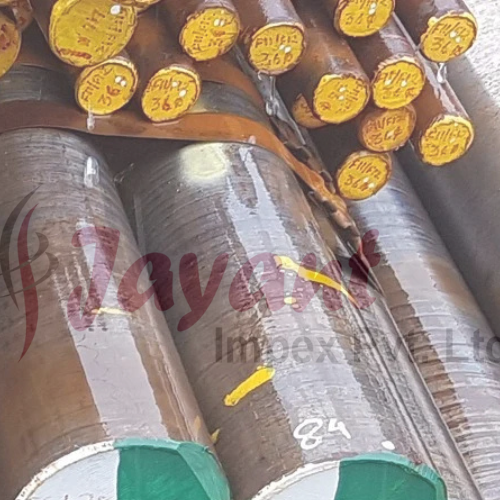
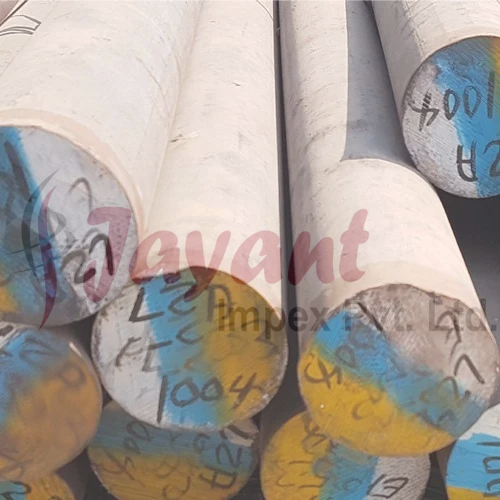
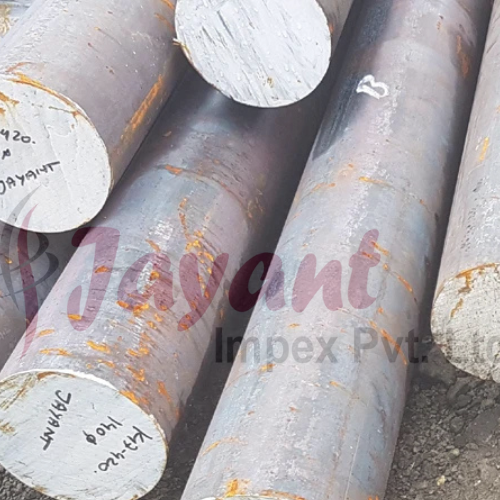
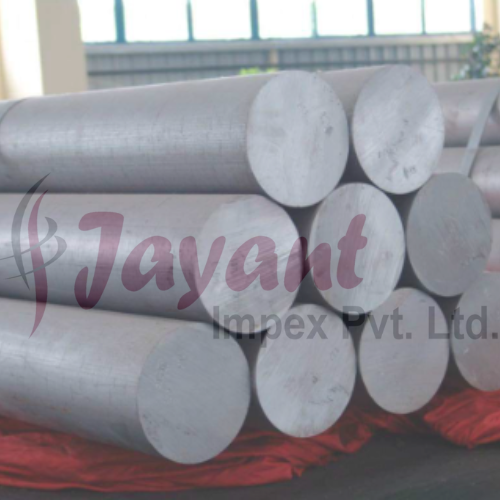
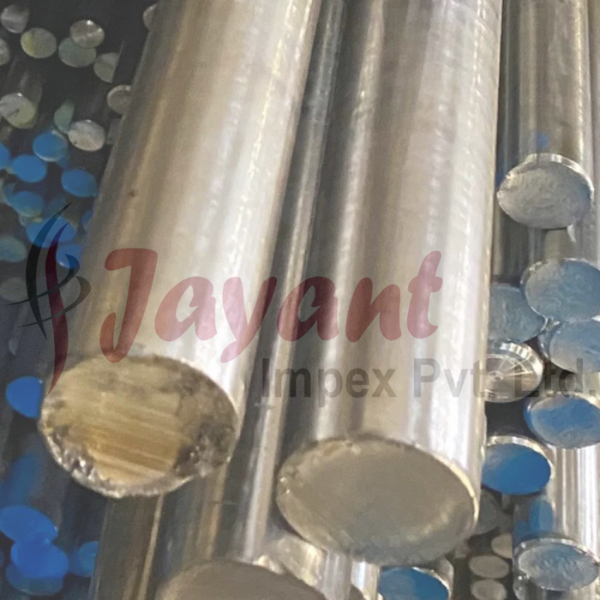
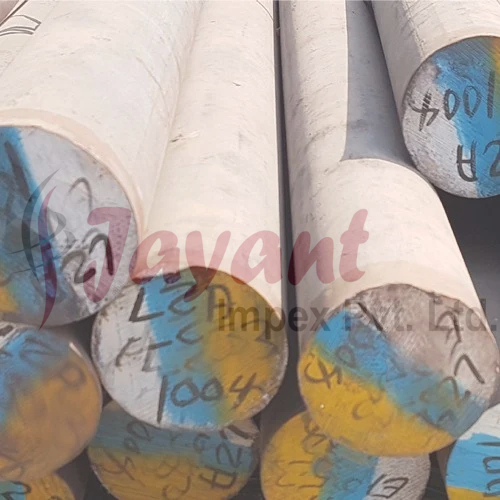
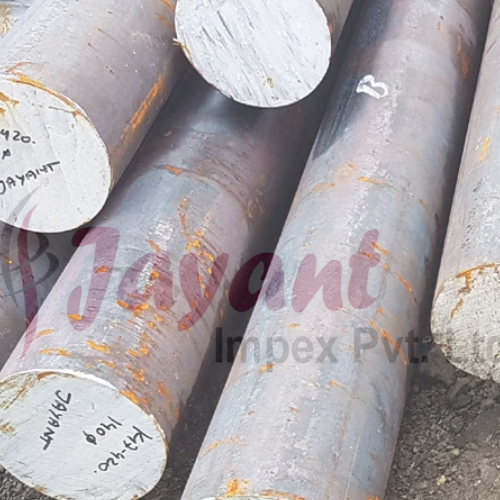
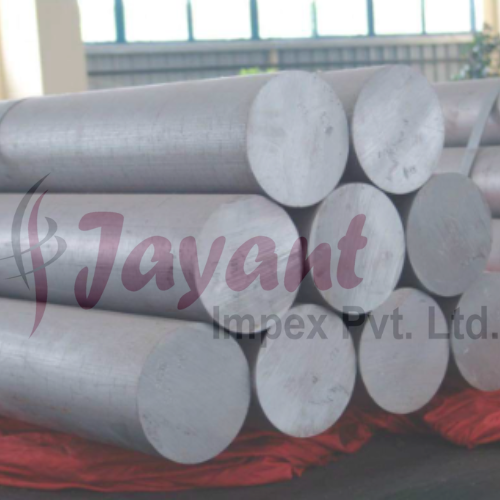
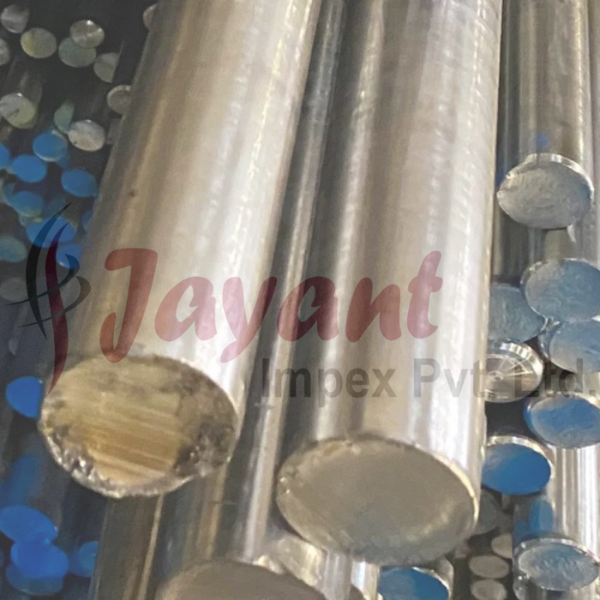
ASTM A182 F53 Super Duplex Steel Round Bars
511.0 INR/Kilograms
Product Details:
- Type Round Bars
- Grade F53 (UNS S32750)
- Specific Use High Corrosion Resistance Environments
- Material Super Duplex Steel
- Application Oil & Gas Industry, Chemical Processing, Marine Applications, Desalination Plants
- Standard ASTM A182 F53
- Length 1 Meter to 6 Meters (Custom Length Available)
- Click to view more
X
ASTM A182 F53 Super Duplex Steel Round Bars Price And Quantity
- 1 Kilograms
- 511.0 INR/Kilograms
ASTM A182 F53 Super Duplex Steel Round Bars Product Specifications
- Oil & Gas Industry, Chemical Processing, Marine Applications, Desalination Plants
- Super Duplex Steel
- Round Bars
- F53 (UNS S32750)
- High Corrosion Resistance Environments
- ASTM A182 F53
- 1 Meter to 6 Meters (Custom Length Available)
- h9, h11, h13 or as specified
- Bright, Black, Peeled, Polished
- Heat Treated & Solution Annealed
- Hot Rolled / Forged
- 10 mm to 350 mm
- Slightly Magnetic
- 290 HB
- 7.8 g/cm3
- Forged/Bars can be Customized
- 800 MPa (Min)
- 15% (Min)
- 40J at -46C
- Solution Annealed (1060oC - 1120oC, Water Quenched)
- Excellent in Chloride and Marine Environments
- 550 MPa (Min)
Product Description
ASTM A182 F53 is an industrial forging specification for super duplex stainless steel components. When you see a round bar designated as "F53," it means the material is produced via hot-forging or hot-rolling processes according to the strict guidelines of ASTM A182 (which governs forged/rolled alloy and stainless steel piping components, flanges, and parts for high-temperature and corrosive service).
Chemically and structurally, ASTM A182 F53 is identical to the standard UNS S32750 alloy (and Werkstoff Nr. 1.4410), delivering a precise 50/50 balance of austenite and ferrite.
Technical Profile
1. Chemical Composition (Wt% per ASTM A182)
The F53 chemistry maximizes pitting and stress-corrosion cracking protection using high levels of chromium and nitrogen.
| Element | Min % | Max % |
| Chromium (Cr) | 24.00 | 26.00 |
| Nickel (Ni) | 6.00 | 8.00 |
| Molybdenum (Mo) | 3.00 | 5.00 |
| Nitrogen (N) | 0.24 | 0.32 |
| Copper (Cu) | 0.50 (Max) | |
| Carbon (C) | 0.030 (Max) | |
| Iron (Fe) | Balance | Balance |
2. Mechanical Property Requirements (Solution Annealed Condition)
Because F53 materials are often utilized in forged pressure boundaries, their structural properties are rigorously verified:
-
Tensile Strength ($R_m$): $ge 750 text{ MPa}$ ($109 text{ ksi}$)
-
Yield Strength ($0.2% text{ Offset}$): $ge 550 text{ MPa}$ ($80 text{ ksi}$)
-
Elongation: $ge 15%$
-
Hardness: Max 310 HBW (or 32 HRC)
-
Impact Energy: High Charpy-V notch toughness down to $-46^circtext{C}$ ($ge 40text{ J}$ typical)
3. Pitting Resistance Equivalent Number (PREN)
Like all premium super duplex alloys, it maintains an exceptionally high PREN to guarantee resistance against localized marine or acidic pitting:
$$text{PREN} = % text{Cr} + 3.3(% text{Mo}) + 16(% text{N}) ge 40$$
Key Benefits of the F53 Forging Process
-
Refined Grain Structure: Forged or hot-rolled F53 round bars possess a much more uniform grain flow and lower macro-segregation compared to standard cast bars. This yields significantly higher impact toughness and fatigue life in cyclical load settings.
-
Integrity in Pressure Environments: Meeting ASTM A182 means the material undergoes strict heat treatment profiles (solution annealing at $ge 1020^circtext{C}$ followed by immediate water quenching). This prevents the harmful precipitation of brittle intermetallic phases like the sigma ($sigma$) phase, which can destroy corrosion resistance.
Processing Considerations
-
Machining challenges: The combination of extreme mechanical strength and a high work-hardening rate means F53 rods require rigid machining setups. Use lower surface speeds, deep cuts, and positive feeds to get beneath the work-hardened surface layer.
-
Thermal Limits: F53 should not be deployed for extended use at temperatures above $300^circtext{C}$. Prolonged exposure to these elevated ranges will trigger "475C embrittlement," resulting in a sharp loss of room-temperature impact toughness.
Typical Applications
-
Oil & Gas Downhole Tools: Heavy-walled forged cylinders, valve stems, bodies, and connection mandrels.
-
High-Pressure Piping Connections: Machined blind flanges, weld-neck components, heavy-wall tees, and elbows.
-
Subsea Extraction Systems: Structural fasteners, clamping components, and subsea manifold valves handling raw sour hydrocarbons.
Superior Corrosion Resistance for Demanding Environments
ASTM A182 F53 Super Duplex Steel Round Bars are renowned for their ability to resist corrosion in highly aggressive environments, such as marine and chemical processing industries. Their composition offers superior protection against pitting and crevice corrosion, making them ideal for use in desalination plants and offshore oil & gas platforms where longevity and performance are paramount.
Precision Manufacturing and Customization
These round bars are forged or hot rolled and undergo solution annealing between 1060C and 1120C, followed by rapid water quenching. This process ensures a uniform, durable microstructure and consistent mechanical properties. Available in various finishes, lengths, diameters, and tolerance levels, the bars can be customized to meet specific project requirements, ensuring maximum compatibility and reliability.
FAQ's of ASTM A182 F53 Super Duplex Steel Round Bars:
Q: How are ASTM A182 F53 Super Duplex Steel Round Bars manufactured?
A: These round bars are produced using hot rolling or forging techniques, followed by solution annealing at 1060C-1120C and rapid water quenching. This process results in excellent mechanical properties and corrosion resistance.Q: What makes F53 Super Duplex Steel ideal for marine and chloride-rich environments?
A: The unique chemical composition and microstructure of F53 Super Duplex Steel ensure outstanding resistance to pitting, crevice, and general corrosion, particularly in chloride-laden and marine environments, making it suitable for harsh applications like desalination and offshore industries.Q: When should I consider using ASTM A182 F53 Super Duplex Steel Round Bars?
A: Choose these bars in scenarios where high corrosion resistance, mechanical strength, and durability in aggressive environments-such as chemical processing plants, the oil & gas sector, and marine infrastructure-are crucial for long-term success.Q: Where can I get ASTM A182 F53 Round Bars in India?
A: You can source these bars from manufacturers, suppliers, exporters, dealers, fabricators, and traders across India who specialize in high-performance alloys for industrial applications.Q: What are the standard mechanical properties of these round bars?
A: ASTM A182 F53 round bars feature a minimum tensile strength of 800 MPa, yield strength of at least 550 MPa, elongation of 15% minimum, impact value of 40J at -46C, and a hardness up to 290 HB, suitable for demanding environments.Q: Which benefits does solution annealing provide to these bars?
A: Solution annealing dissolves unwanted phases, homogenizes the alloy, and optimizes corrosion resistance. The subsequent water quenching locks in a favorable microstructure, resulting in enhanced mechanical and anti-corrosive properties.Q: How can these bars be customized for specific projects?
A: Bars can be supplied in lengths from 1 to 6 meters (or custom sizes), with diameters ranging from 10 mm to 350 mm, various finishes such as bright, black, peeled, or polished, and tolerances like h9, h11, or h13, as per the project's specifications.Tell us about your requirement

Price:
Quantity
Select Unit
- 50
- 100
- 200
- 250
- 500
- 1000+
Additional detail
Mobile number
Email

Other Products in 'Steel Bar' category

JAYANT IMPEX
GST : 27AAQFJ5764L1ZJ
GST : 27AAQFJ5764L1ZJ

- 6th, 605, Majestic Shopping Center, Jagannath Shankarseth Road, Girgaon,Mumbai - 400004, Maharashtra, India
- Phone : 08045800544

- Mr Shrenik Prakash Mehta (Director)
- Mobile : 08045800544
-
jayantimpex12@gmail.com


-
Share to



 Send Inquiry
 Send SMS
 Call Me Free
JAYANT IMPEX PVT. LTD. All Rights Reserved.(Terms of Use)
Developed and Managed by Infocom Network Private Limited. Terms of use | Returns Policy Member
Developed and Managed by Infocom Network Private Limited. Terms of use | Returns Policy Member
